
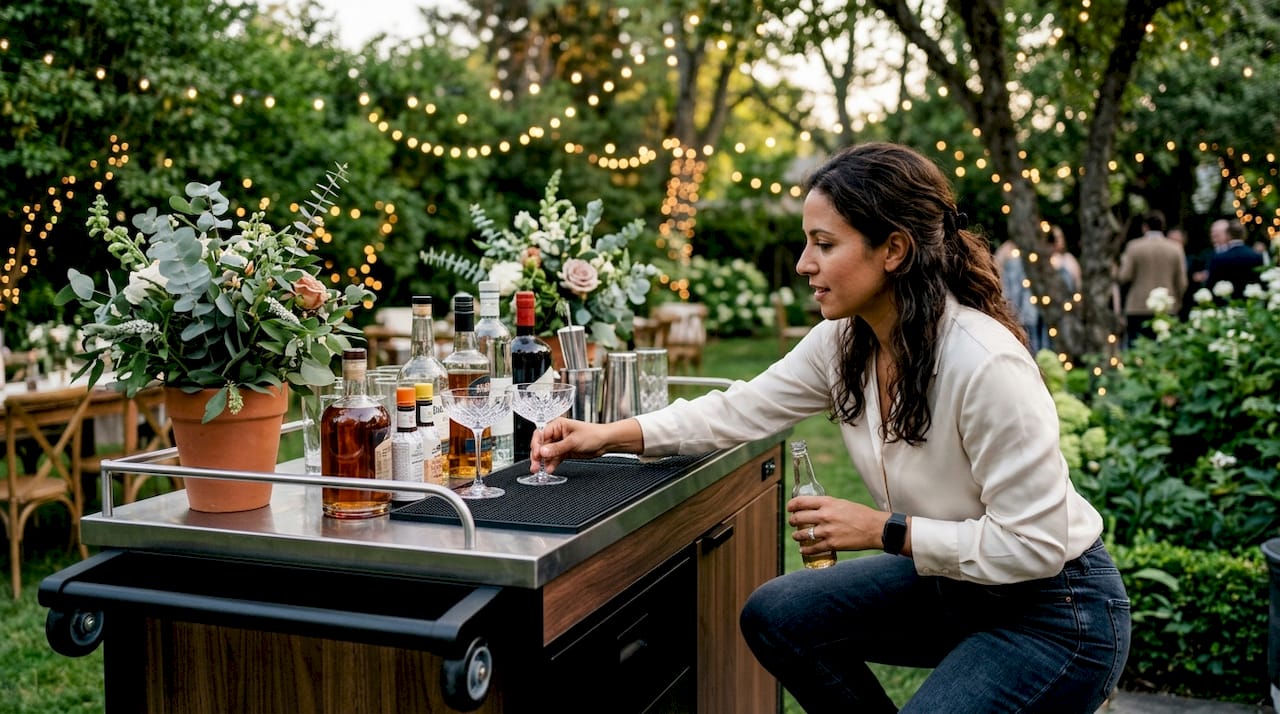
A portable bar unit is a self-contained, mobile bar station built for quick setup and efficient beverage service at any event. Unlike a fixed bar, it ships to the venue, deploys in minutes, and stores compactly between events. Professional models use stainless steel construction, integrated insulated ice bins, removable speed rails, and heavy-duty swivel casters with locking mechanisms. The industry term for this equipment is “mobile bar,” though “portable bar unit” is the phrase most event planners search when comparing options. Whether you are planning a Las Vegas wedding, a corporate reception, or a private backyard party, understanding what a portable bar unit means is the first step toward choosing the right setup.
What is a portable bar unit made of, and what features matter most?
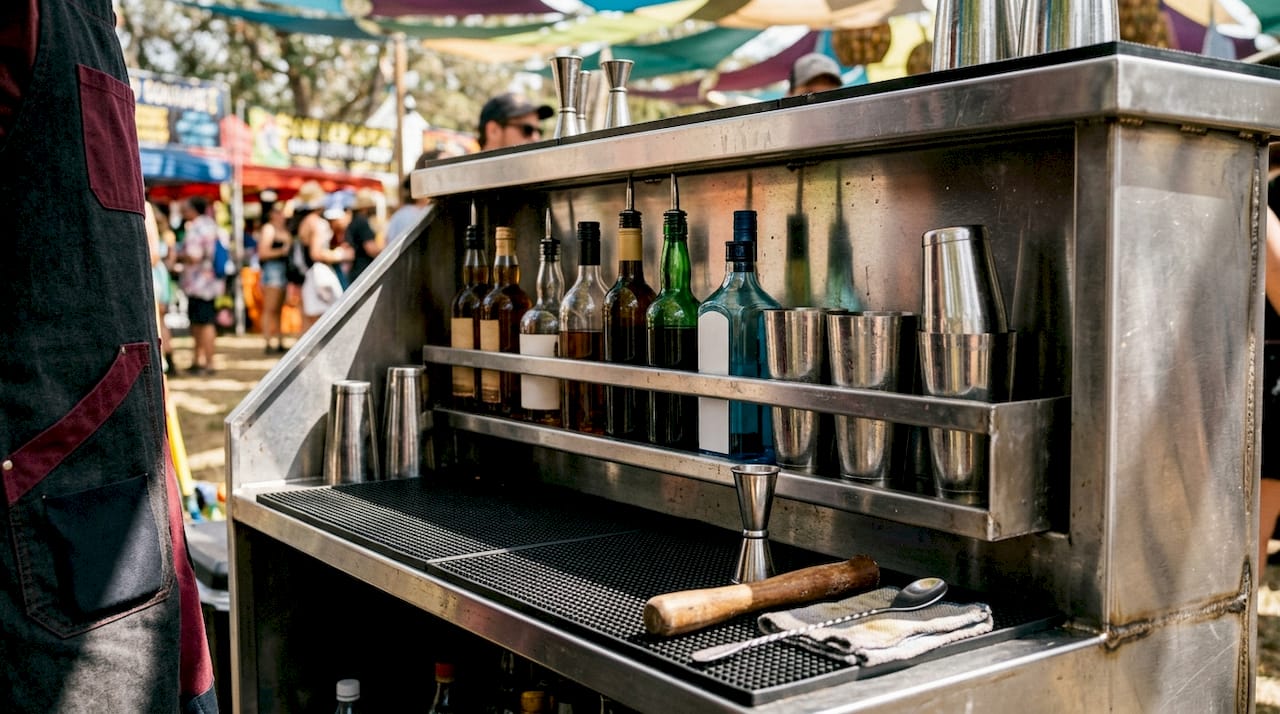
The core of any quality portable bar is its material and functional components. Stainless steel construction dominates professional models because it resists corrosion, cleans easily, and meets food service sanitation standards. Aircraft-grade aluminum appears in lighter units where weight reduction is the priority. Both materials handle the punishment of repeated transport and high-volume service.
The functional components separate a working bar from a decorative table. Speed rails mount along the interior front edge and hold bottles within arm’s reach of the bartender, cutting pour time significantly. Insulated ice bins keep ice frozen for hours without a refrigeration unit. Open shelving below the work surface stores mixers, glassware, and backup bottles. Each of these features directly affects how fast a bartender can serve a full crowd.
| Feature | Purpose | What to look for |
|---|---|---|
| Insulated ice bin | Keeps ice frozen without power | Deep capacity, removable liner |
| Stainless steel speed rail | Holds bottles within reach | Removable, adjustable width |
| Heavy-duty swivel casters | Moves bar across surfaces | Locking mechanism, rubber wheels |
| Open interior shelving | Stores supplies and glassware | Multiple tiers, weight-rated |
| Fold-down or modular design | Reduces storage footprint | Collapses to 5 inches or less in depth |
Units built for high-volume service range from around 50 lbs for compact folding models to over 500 lbs for full commercial setups. That weight range reflects the difference between a bar for 30 guests and one serving 500.
Pro Tip: Always verify the interior storage layout before purchasing. A bar with a large footprint but minimal shelving forces bartenders to leave the station repeatedly, which slows service and frustrates guests.
What types of portable bar units are available?
Portable bars fall into three broad categories, and each serves a different event profile.
Folding bars are the entry point. One person can set them up in under a minute, and they collapse flat for van or SUV transport. They work well for small private parties and low-volume corporate receptions. The trade-off is limited storage and a less polished visual presence.
Modular systems connect straight and corner segments to build custom bar footprints. Modular designs scale from a single straight section to a full wraparound bar for multi-bartender service. A two-person team can transition a modular system from transport to fully operational in under two minutes. These bars suit events ranging from 50 to 500 or more guests, making them the most flexible option for professional event planners.
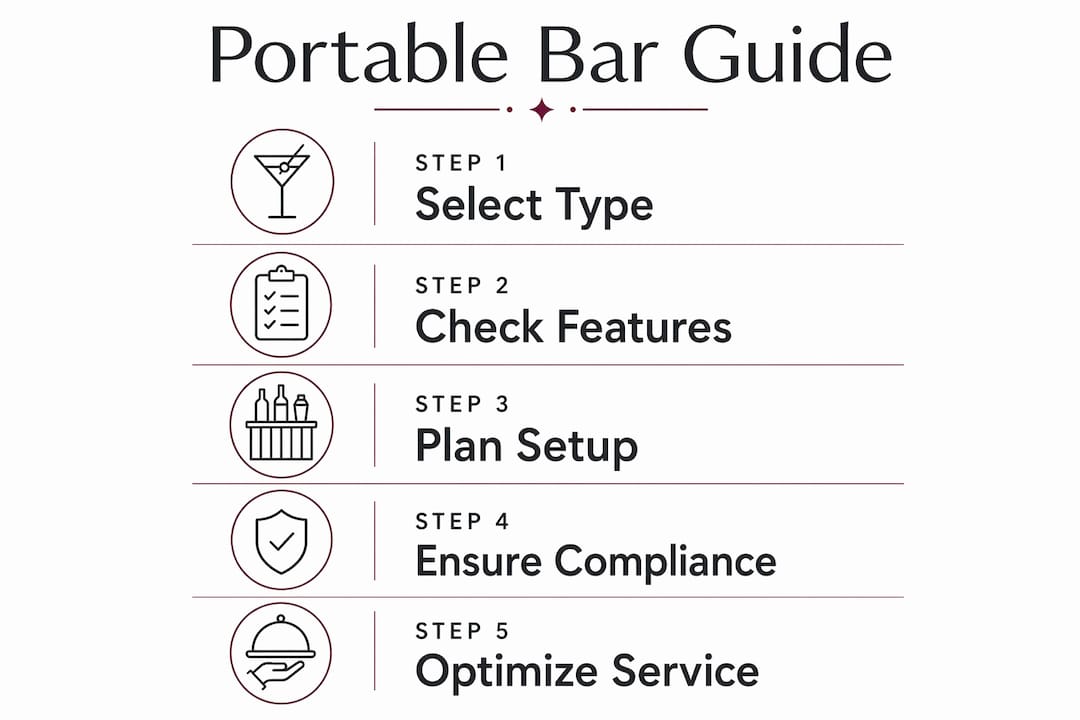
Heavy-duty permanent-style portable bars look and function like built-in bars but move on casters. They require more setup time and a larger vehicle for transport, but they deliver the best service capacity and the most professional appearance.
Modern design has pushed all three categories forward. Key upgrades now include:
- Battery-powered LED lighting integrated into the bar facade, eliminating extension cords
- Customizable front panels that match wedding colors or corporate branding
- Weatherproof finishes for outdoor event use
- Wider work surfaces to support two bartenders working side by side
The trend toward bars as aesthetic focal points reflects a real shift in event design. Planners no longer treat the bar as a utility station. It is a visual centerpiece that guests photograph and gather around.
What are the benefits of a portable bar for events?
The primary benefit is flexibility. A portable bar goes where a fixed bar cannot: outdoor terraces, hotel ballrooms without built-in service stations, rooftop venues, and private estates. That flexibility gives event planners control over traffic flow and guest experience in ways a permanent bar never allows.
Storage efficiency is the second major advantage. Bars that collapse to 5 inches or less in depth fit in a standard cargo van alongside other event equipment. That compact profile means one vehicle can carry the bar, glassware, and supplies to the venue without a dedicated truck.
Service speed is the third benefit, and it is the one most planners underestimate. A well-equipped portable bar keeps everything a bartender needs within two steps. That setup reduces wait times, increases guest satisfaction, and lets a single bartender handle a larger crowd. For corporate events and weddings, faster service directly affects how guests rate the overall experience.
Event types that benefit most from portable bar setups:
- Weddings: Cocktail hours on outdoor terraces or in separate reception spaces
- Corporate events: Branded bar setups for product launches and client receptions
- Private parties: Backyard gatherings where no fixed bar exists
- Conferences: Networking receptions in convention center pre-function spaces
Pro Tip: Avoid any bar that sacrifices internal storage for a slimmer profile. Insufficient storage forces bartenders to leave the station for supplies, which breaks service flow and creates bottlenecks during peak demand.
How do you set up a portable bar unit?
Setup time depends entirely on the bar type. Folding units deploy in under a minute with one person. Modular systems take two people and roughly two minutes per segment. Heavy-duty commercial bars require a team and can take 15–30 minutes depending on configuration.
A practical setup sequence for most events follows four steps:
- Position the bar in the designated service area before locking the casters. Roll it into place on unlocked wheels, then engage all four locks to prevent movement during service.
- Assemble modular sections if applicable. Connect straight segments first, then add corner pieces to shape the footprint around the space.
- Stock from the inside out. Fill the ice bin first, then load the speed rail, then arrange back stock on the interior shelves. This order prevents reaching over a stocked rail while filling ice.
- Test stability before service. Apply lateral pressure to the bar surface and confirm no rocking. A bar must support fully loaded weights exceeding 200 lbs to maintain safety during busy service periods.
Caster quality determines how smoothly the bar moves across different surfaces. Rubber wheels protect hardwood floors and grip concrete. Locking mechanisms on all four casters are non-negotiable for safety. When transporting, confirm the bar fits through the venue’s service entrance before the event day. A 72-inch bar will not clear a 60-inch doorway, and discovering that on-site wastes time and creates stress.
What are the legal requirements for using a portable bar at events?
A portable bar does not create a legal shortcut. Portable bars are legally extensions of licensed premises, which means operators must hold the appropriate liquor license and catering permits for every event where alcohol is served. This applies regardless of whether the bar is owned by the host or provided by a catering company.
Regulatory requirements vary by state and municipality, but the core obligations are consistent. The person or company serving alcohol must hold a valid license. The event venue must permit alcohol service. Off-site catering operations require a catering endorsement or separate permit in most jurisdictions. Failing to meet these requirements exposes both the host and the service provider to fines, license revocation, and liability.
Event planners working in Nevada should review liquor catering compliance requirements specific to Las Vegas and Henderson before signing any vendor contract. Compliance is not optional, and it is not the bar equipment’s responsibility. It belongs to the operator.
Key Takeaways
A portable bar unit is only as effective as the combination of its physical features, operational setup, and legal compliance behind it.
| Point | Details |
|---|---|
| Definition matters | A portable bar unit is a self-contained mobile bar, not just a folding table with bottles on it. |
| Features drive service quality | Speed rails, insulated ice bins, and interior shelving determine how fast and efficiently a bartender works. |
| Type determines scale | Folding bars suit small gatherings; modular systems scale to 500 or more guests with multi-bartender setups. |
| Storage depth is critical | Bars that collapse to 5 inches or less in depth are far easier to transport and store between events. |
| Compliance is mandatory | Portable bars are legal extensions of licensed premises and require proper permits regardless of event type. |
What I’ve learned from watching portable bars succeed and fail at events
The most common mistake I see event planners make is choosing a bar based on how it looks in a photo. A bar with a gorgeous LED facade and a slim profile can be a nightmare in practice if it has no interior storage. The bartender ends up using a folding table behind the bar to hold supplies, which defeats the entire purpose of a professional setup.
The second mistake is underestimating setup time. A modular system that takes two minutes per segment sounds fast until you are assembling six segments in a hotel ballroom with a catering team arriving at the same time. Plan for setup time to be at least double what the manufacturer claims, especially at unfamiliar venues.
What actually works is treating the bar as a workstation first and a visual element second. The best portable bars I have seen in action at Las Vegas events are the ones where the bartender never has to leave the station. Everything is within reach, the ice bin is deep enough to last the full service period, and the casters lock solid on the first try. The aesthetic comes after the function is confirmed.
For conference bartending setups, I would always recommend a modular system over a single folding unit. The ability to expand the footprint for a larger crowd or contract it for a smaller space is worth the additional setup time every time.
— Brennon
Portable bar service in Las Vegas, done right
Planning a wedding, corporate event, or private party in Las Vegas or Henderson means you need more than the right equipment. You need a licensed team that knows how to operate it.
Liquidcouragelv provides full liquor catering and professional bartending services for events across Las Vegas and Henderson, Nevada. Every setup includes licensed bartenders, compliance support, and customizable event packages built around your guest count and venue. Whether you need a single bar station for a cocktail hour or a multi-bartender setup for a 300-person corporate reception, Liquidcouragelv handles the logistics so you can focus on the event. Reach out to discuss your event at liquidcouragelv.com/appointments.
FAQ
What does portable bar unit mean?
A portable bar unit is a self-contained, mobile bar station designed for off-site beverage service at events. It includes built-in storage, a work surface, and mobility features like casters for repositioning.
How much does a portable bar unit weigh?
Portable bar units range from approximately 50 lbs for compact folding models to over 500 lbs for full commercial setups, depending on materials and size.
How long does it take to set up a portable bar?
Folding units set up in under a minute. Modular systems take roughly two minutes per segment with a two-person team. Heavy-duty commercial bars require more time and additional labor.
Do I need a liquor license to use a portable bar at an event?
Yes. Portable bars are legal extensions of licensed premises, and operators must hold valid liquor licenses and catering permits for every event where alcohol is served.
What is the best portable bar option for large events?
Modular systems are the best choice for large events. They connect straight and corner segments to build custom bar footprints that support multi-bartender service for crowds of 50 to 500 or more guests.