
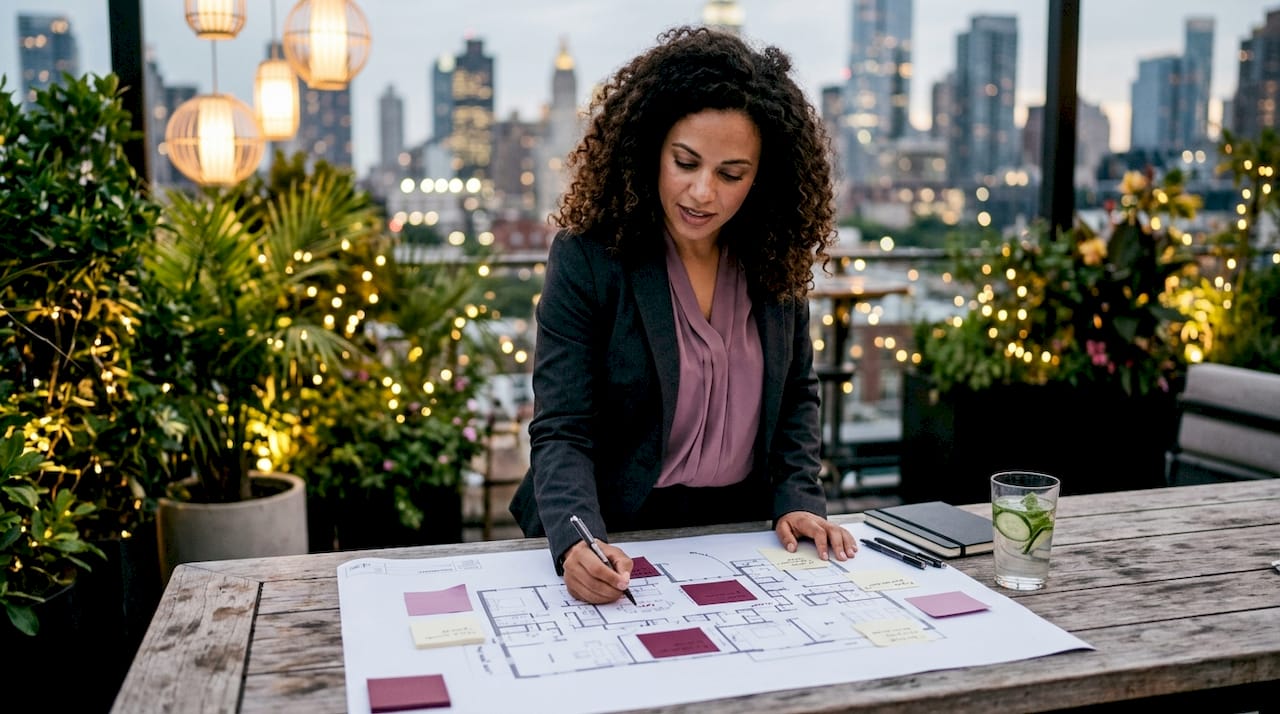
A cocktail reception before a corporate dinner is defined as a structured pre-dinner social event designed to facilitate networking, set the tone for the evening, and warm up guests before a formal seated meal. The industry term for this format is a “pre-dinner reception,” and it functions as the most productive networking window of any corporate evening. When you arrange a cocktail reception before a corporate dinner with intention, you transform a logistical gap into your event’s most memorable hour. The difference between a forgettable reception and one that drives real business connections comes down to three things: timing, layout, and beverage service.
How to arrange a cocktail reception before a corporate dinner
Reception planning must be driven by a clear business purpose to maximize guest engagement and return on investment. Before you book a venue or order a single bottle, define what success looks like. Are you introducing a new leadership team? Celebrating a client milestone? Closing out a conference? The answer shapes every decision that follows.
Setting your budget and guest list
Corporate event budgets allocate 20–25% to catering with a 10–15% contingency built in. That means if your total event budget is $20,000, plan to spend $4,000–$5,000 on food and beverage, with $2,000–$3,000 held in reserve. Venue costs typically consume 30–40% of the total budget, so locking in your space first gives you a realistic number to work with for everything else.
Guest list size directly determines your bar staffing, food quantity, and floor plan. For a pre-dinner cocktail event, send invitations three to four weeks in advance for internal corporate guests, and six to eight weeks out for external clients or VIPs. Confirm dietary restrictions at the RSVP stage, not the day of the event.
Choosing the right venue for a pre-dinner reception
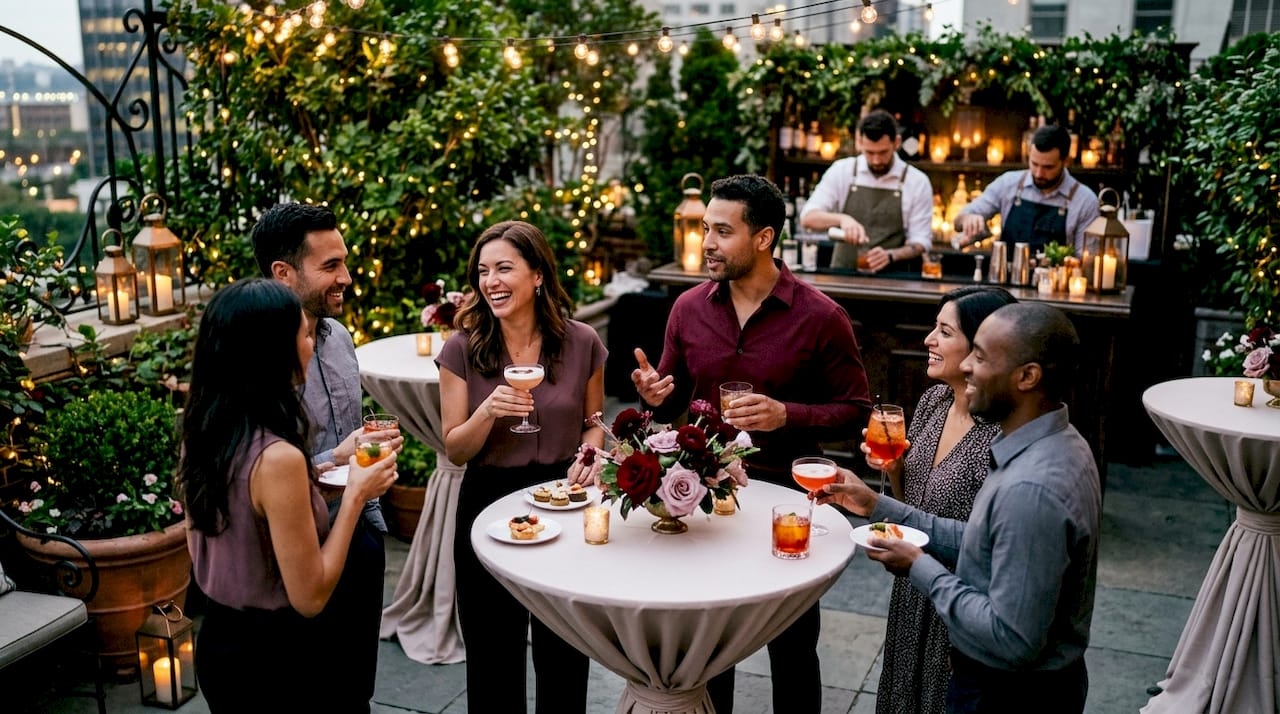
The venue must connect physically to your dinner space. A reception held in a separate building or across a large campus creates friction and kills momentum. The best setups use an adjacent foyer, a pre-function room, or an outdoor terrace that flows directly into the dining room. This makes the transition from cocktails to dinner feel natural rather than forced.
| Planning Element | Standard |
|---|---|
| Budget allocation for catering | 20–25% of total event budget |
| Contingency fund | 10–15% of total budget |
| Venue cost share | 30–40% of total budget |
| Invitation lead time (internal) | 3–4 weeks |
| Invitation lead time (external/VIP) | 6–8 weeks |
How do you optimize venue layout for maximum networking?
Guest flow is the single most underestimated factor in planning a corporate cocktail event. Effective guest flow management requires spreading bars and food stations evenly throughout the space to prevent bottlenecks. When you cluster the bar, the food, and the registration table in one corner, guests pile up there and ignore the rest of the room.
Creating conversation zones
Limiting seating to roughly 20% of your guest count encourages movement and prevents social stagnation. Use high-top tables as gathering anchors rather than full seating arrangements. Guests who sit down tend to stay put, which kills circulation and reduces the number of connections made.
Design at least three distinct conversation zones across the room. Place one near the bar, one near the food stations, and one in a quieter corner for more focused conversations. Each zone should have a slightly different energy, which naturally draws different personality types and keeps the room feeling alive.
- Bar placement: Position at least two bar stations on opposite sides of the room for groups of 50 or more guests.
- Food stations: Spread passed appetizers and stationary displays across the full floor plan.
- Lighting: Use warm, dimmed lighting at 60–70% of full brightness to create a relaxed but professional atmosphere.
- Coat check: Place coat and bag drop at the entrance, not near the bar, so guests arrive at the reception unencumbered and ready to engage.
- Signage: Keep directional signage minimal and elegant. Guests should feel guided, not herded.
Pro Tip: Place your most visually striking element, such as a branded cocktail display or a floral centerpiece, at the far end of the room from the entrance. Guests will naturally walk toward it, distributing the crowd and opening up the space near the door.
What is the step-by-step process for managing timing and beverage service?
Execution is where most pre-dinner receptions succeed or fail. The sequence below reflects current industry practice for a business dinner cocktail event serving 30–150 guests.
- Set a 45–60 minute reception window. The ideal cocktail reception duration is 45–60 minutes to maintain guest energy and momentum heading into dinner. Anything beyond 90 minutes causes fatigue and reduces engagement at the table.
- Estimate drink quantities accurately. The standard beverage rule is 2–3 drinks per guest in the first hour, then 1–2 drinks per hour after that. For 30 guests over a 60-minute reception, plan for 60–90 drinks total.
- Hire a mixologist, not just a bartender. A mixologist elevates perceived event value and gives guests a reason to visit the bar beyond thirst. Crafting 2–3 signature cocktails linked to your company story turns the bar into a conversation starter.
- Time leadership remarks carefully. Early leadership remarks set the tone and communicate appreciation effectively. Schedule any welcome speech 15–20 minutes into the reception, after guests have a drink in hand but before energy peaks and attention drifts.
- Coordinate food and drink replenishment on a schedule. Pass appetizers every 8–10 minutes during the first half of the reception. Slow the cadence in the final 15 minutes to signal the transition to dinner without making an announcement.
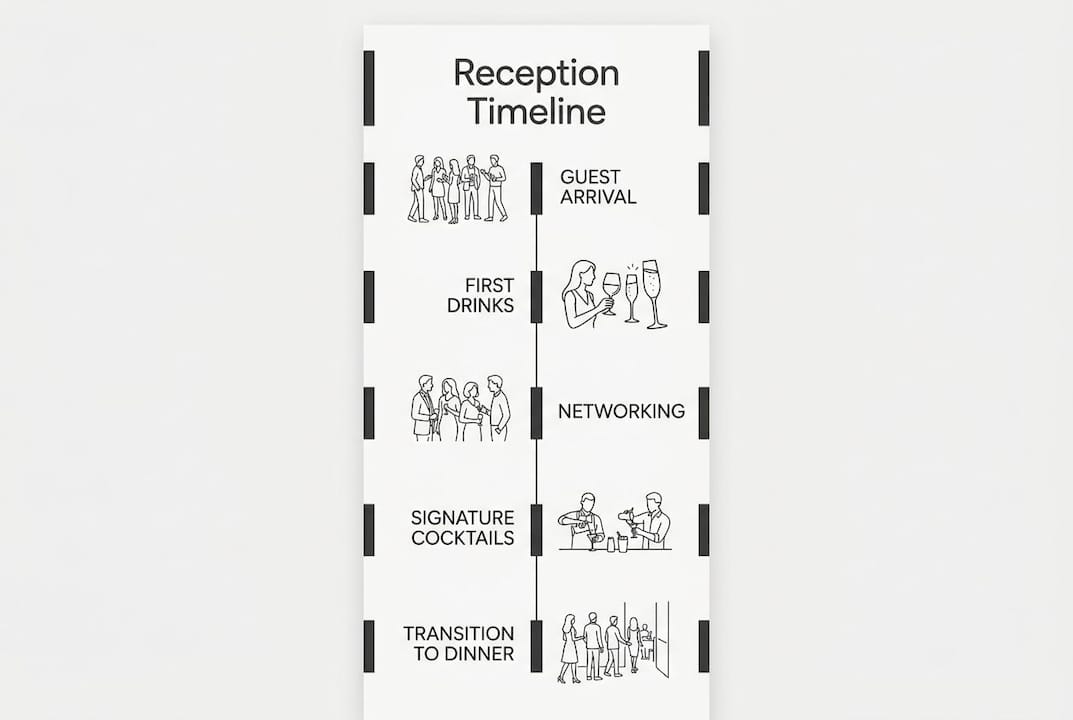
- Use subtle cues to close the reception. Dim the lights slightly, have staff begin clearing glasses, and open the doors to the dining room. Guests read these environmental signals without needing a PA announcement.
| Timing Milestone | Recommended Action |
|---|---|
| T+0 (doors open) | Guests arrive, first round of drinks served |
| T+15 minutes | Welcome remarks from leadership |
| T+20–40 minutes | Peak networking window, full appetizer service |
| T+45 minutes | Slow food cadence, begin subtle transition cues |
| T+60 minutes | Dining room opens, guests seated |
Pro Tip: Personalized signature cocktails dramatically improve guest recollection. Research shows 94% of guests remembered a cocktail name that reflected the host’s story. Name your signature drink after a company milestone, a founding city, or a product launch.
What are the most common pitfalls when hosting a cocktail reception?
Even well-planned receptions run into problems. Knowing the failure points in advance lets you build in safeguards before the event day.
The biggest mistake planners make is treating the cocktail reception as a waiting room for dinner. When the reception has no clear purpose, guests feel it immediately. They check their phones, cluster with people they already know, and arrive at the dinner table already disengaged. The reception is not a gap to fill. It is the event.
- Too much seating: Chairs and sofas signal “stay here.” Remove them or limit them to 20% of your guest count to keep people moving.
- A gap longer than 90 minutes: Scheduling the reception too far before dinner causes guest fatigue and reduces energy at the table. Keep the total window tight.
- Slow drink service: A line at the bar longer than three minutes kills momentum. Staff one bartender per 50 guests as a minimum, and add a dedicated cocktail server for signature drink distribution.
- No clear communication about the schedule: Guests who do not know when dinner starts cannot pace themselves. Include the timeline on the invitation or in a brief welcome message at the door.
- Ignoring non-drinkers: Offer at least two non-alcoholic options that are as thoughtfully presented as the cocktails. A sparkling water with fresh herbs signals inclusion without calling attention to it.
Key Takeaways
A pre-dinner cocktail reception succeeds when timing, layout, and beverage service work together as a single coordinated system.
| Point | Details |
|---|---|
| Keep the reception to 45–60 minutes | Longer receptions drain guest energy before dinner even starts. |
| Spread bars and food stations evenly | Distributed placement prevents bottlenecks and encourages circulation. |
| Limit seating to 20% of guest count | Less seating means more movement and more meaningful connections. |
| Plan 2–3 drinks per guest for the first hour | Accurate quantity planning prevents shortages and controls costs. |
| Use a mixologist for signature cocktails | Branded drinks serve as conversation starters and improve guest recall. |
What corporate cocktail receptions taught me about guest behavior
Brennon’s perspective:
Most planners I talk to spend 80% of their planning energy on the dinner and treat the reception as an afterthought. That is exactly backwards. The reception is where deals get started, where strangers become colleagues, and where the emotional tone of the entire evening gets set. By the time guests sit down to dinner, the social architecture is already built. You are just maintaining it.
Modern corporate events favor fluid social interaction over structured dining hierarchies, and I have seen this shift accelerate sharply. Guests no longer want to be seated next to a stranger for two hours with no warm-up. They want to choose their conversations first. The reception gives them that agency, and when you design it well, they arrive at the table already invested in the people around them.
The one thing I would tell every planner: stop trying to fill the reception with programming. No trivia games, no forced icebreakers, no slideshow running on a loop. Give people a great drink, a beautiful space, and a reason to talk. The conversation will happen on its own.
— Brennon
Liquidcouragelv brings professional bar service to your corporate reception
Corporate event planners in Las Vegas and Henderson trust Liquidcouragelv to handle the beverage side of pre-dinner receptions without a single logistical headache. The team arrives with a fully equipped mobile bar setup that fits any venue configuration, from hotel pre-function rooms to outdoor terraces.
Liquidcouragelv provides professional mixologists who craft signature cocktails aligned with your company’s brand and event theme. Every service includes quantity planning, staffing, and full setup and breakdown. For planners who need conference bartending service that runs on schedule and keeps guests engaged from the first pour to the last, Liquidcouragelv is the call to make. Reach out to discuss your event details and get a proposal built around your guest count and timeline.
FAQ
How long should a cocktail reception last before a corporate dinner?
The ideal duration is 45–60 minutes. Receptions longer than 90 minutes cause guest fatigue and reduce energy at the dinner table.
How many drinks should you plan per guest at a pre-dinner reception?
Plan for 2–3 drinks per guest during the first hour, then 1–2 drinks per hour after that. For 30 guests at a 60-minute reception, that means 60–90 total drinks.
What percentage of the event budget should go to catering?
Corporate event budgets typically allocate 20–25% to catering, with an additional 10–15% held as a contingency fund.
Should you limit seating at a cocktail reception?
Keep seating to no more than 20% of your guest count. Excess seating anchors guests in place and reduces the circulation that makes networking possible.
What is the difference between a bartender and a mixologist at a corporate event?
A bartender serves drinks efficiently. A mixologist crafts signature cocktails tied to your company’s story, which turns the bar into a networking tool and improves guest recall of the event.