
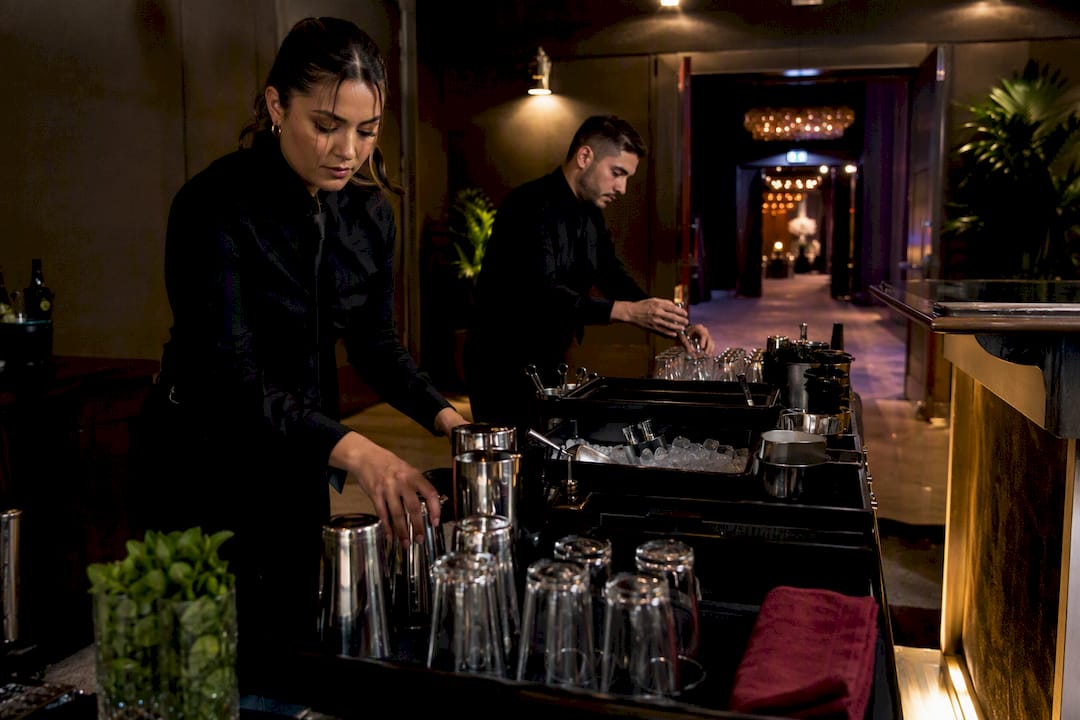
“Alcohol sponsorship for events” means hiring a licensed mobile bartending or liquor-catering provider, not landing a brand deal. The action that matters: hire a provider who hands you a written scope of service, a certificate of insurance, and a staffing plan matched to your guest count before you sign anything. Confirm those three items and you avoid the failures that actually sink events, permits, understaffing, and vague contracts.
TL;DR:
- Vendors often quote different service models, so clarify whether you are getting equipment only, staff only, or full-service packages to avoid hidden costs.
- Confirm that your vendor holds the Clark County Liquor Caterer Permit or shows a clear plan to obtain one before finalizing any agreement.
- Always request a certificate of insurance that names your venue as additional insured and verify liquor liability coverage and staff certification.
- Plan for one bartender per 50 to 75 guests for full bar service or one per 75 to 100 guests for beer and wine, adjusting staffing for compressed service windows.
- Prioritize obtaining permits, insurance, and solid staffing plans over elaborate drink menus or signature cocktails when selecting your vendor.
Table of Contents
- What “Alcohol Sponsorship for Events” Actually Means for Organizers
- Dry Hire, Bartender-Only, or Full-Service: What’s Actually Included
- What Permits and Insurance Do You Actually Need?
- How Much Does Mobile Bartending Cost in Las Vegas?
- How Many Bartenders Do You Need Per Guest?
- What Should You Ask Before Signing a Contract?
- Where Bar Service Actually Breaks Down on Event Day
- The Priority Order Most Planners Get Backward
- How Liquid Courage Handles the Details So You Don’t Have To
- Permit Forms and Checklists Worth Bookmarking
- Sources
- FAQ
What “Alcohol Sponsorship for Events” Actually Means for Organizers
Search the phrase and you’ll find plenty about brands funding festivals. That’s not what Las Vegas and Henderson planners need when they type it into Google at 11 p.m. two weeks before a wedding. What they need is a vetted bartender or liquor caterer who shows up with the right permit, the right insurance, and enough hands to keep a line from forming at the bar.
The correct industry term is liquor catering or mobile bartending services, and that’s the language you’ll hear from vendors, venues, and the Clark County Department of Business License. Think of “alcohol sponsorship” here as shorthand for “who is legally and operationally responsible for serving drinks at my event.” That responsibility gets divided across a few standard service models, and knowing which one you’re buying determines whether your quote actually covers what you think it covers.
Dry Hire, Bartender-Only, or Full-Service: What’s Actually Included
Vendor quotes for the same event can differ by hundreds of dollars because they’re quoting different jobs. A dry hire typically means you’re renting equipment (bar structure, tools, sometimes glassware) with no staff and no alcohol included. A bartender-only booking gets you trained staff who show up and pour, but you or your venue supply the liquor, ice, and mixers. Full-service mobile bar packages bundle staff, bar setup, and often the alcohol itself into one line item.
None of these terms are standardized across the industry, which is exactly why comparing quotes by price alone backfires. A vendor recommendation worth following: ask every provider for a written owner’s list assigning each responsibility, alcohol, ice, mixers, garnish, glassware, so you’re comparing the same job twice, not two different jobs that happen to cost different amounts.
Before you request quotes, know what each model generally covers:
- Dry hire: equipment and bar structure only; you supply staff, alcohol, ice, and mixers
- Bartender-only: trained staff and service; you or the venue supply alcohol, ice, mixers, and often glassware
- Full-service mobile bar: staff, setup, glassware, and frequently the alcohol itself, all under one contract
Get the assignment in writing. A service model checklist built around this exact question is one of the more useful tools available to organizers comparing vendors, and it catches the gap before it becomes a day-of scramble over who forgot the vodka.
What Permits and Insurance Do You Actually Need?
Clark County requires a Liquor Caterer Permit for special events, and the Clark County Department of Business License and charges fees per service station, with late applications doubling the cost. Ask your vendor directly whether they hold this permit or whether you need to apply yourself; a legitimate mobile bar operator should know the answer instantly.
Clark County charges a base fee of $10 per service station, and applications require employee lists plus proof of responsible-service training. That’s a specific, checkable detail, not a rumor, so don’t take a vendor’s word for it. Ask to see the permit or the application in progress.
Beyond the permit, request a certificate of insurance (COI) naming your venue as additional insured if the venue requires it, and most do. Vendor checklists from The Knot recommend verifying liquor liability coverage and staff certification (TIPS or equivalent) before any deposit changes hands.
Three checks to run before you book:
- Confirm the vendor’s Liquor Caterer Permit status or timeline for Clark County events
- Request a COI that names your specific venue as additional insured
- Ask your venue directly about exclusive-vendor rules or house beverage restrictions
Our own breakdown of what event insurance covers for bartending walks through what a proper COI should actually contain.
How Much Does Mobile Bartending Cost in Las Vegas?
Vendors price mobile bar services three main ways: per-bartender hourly rate, flat mobile-bar package covering setup through teardown, or per-person beverage cost for full open-bar events. None is inherently better, but each shifts risk differently, hourly pricing punishes you for a slow night, while per-person pricing punishes the vendor for an unexpectedly thirsty crowd.
Confirm these line items before comparing any two quotes:
- Setup and teardown time, and whether it’s billed separately from bar hours
- Overtime rate if your event runs past the contracted window
- Travel fees for Henderson venues versus the Las Vegas Strip corridor
- Gratuity policy (built in or added at signing)
- Equipment rental (bar structure, glassware, ice bins) if not bundled
- Whether alcohol is host-supplied or vendor-provided
A rough sample: a 100-guest wedding with two bartenders for five hours at a flat package rate, plus a rented bar structure and host-supplied liquor, typically lands in a different budget bracket than the same event with a full-service vendor supplying everything. The gap is almost always in who’s buying the alcohol, not in the labor.
Pro Tip: Don’t cut staff to save money. Cut the cocktail menu instead. Two bartenders running a simplified three-drink list will always outperform three bartenders juggling a twelve-cocktail menu, and you’ll spend less on both labor and ingredients.
How Many Bartenders Do You Need Per Guest?
The standard ratio is one bartender per 50 to 75 guests for a full open bar, and one per 75 to 100 guests for beer-and-wine-only service, according to mobile bar planning guides. Add a bartender beyond that baseline for any event with a hard arrival surge, cocktail hour compressed into 45 minutes is a different staffing problem than a four-hour open house.

Speed comes from planning, not just headcount. Batching cocktails ahead of service, running a signature two or three drink menu instead of a full bar list, and laying out multiple stations instead of one bottleneck all cut line time without adding staff. Pass service for the first 15 minutes of arrival, a server circulating with a tray, buys your bartenders time to set up before the rush hits.
Ask any vendor how they’d staff your specific guest count and timeline, and ask what their backup plan looks like if a bartender calls out. A vendor without a real answer to backup staffing is a vendor you’ll be calling in a panic the morning of your event.
- One bartender per 50 to 75 guests for full bar service
- One bartender per 75 to 100 guests for beer-and-wine-only setups
- Add staff for compressed cocktail hours or heavy arrival windows
Pro Tip: Ask your caterer to stock two or three well-made nonalcoholic options alongside the bar. Guests who aren’t drinking still stand in the same line, and a good mocktail selection moves them through faster.
For corporate events specifically, guest-count math gets more complicated with badge scans and staggered arrivals; our bar planning guide for corporate events covers that math directly.
What Should You Ask Before Signing a Contract?
Run through these questions with any vendor before a deposit changes hands:
- Can you show me your current Clark County Liquor Caterer Permit or your plan to obtain one?
- What does your COI cover, and will it name my venue as additional insured?
- Who supplies the alcohol, ice, mixers, and glassware, in writing?
- What’s your staffing ratio for my guest count, and what’s your backup plan if someone cancels?
- What are your setup and teardown times, and is overtime billed separately?
- What’s your last-call policy, and does it match my venue’s house rules?
Insist on getting the scope of service, COI details, cancellation terms, and last-call policy in writing inside the contract itself, not just discussed on a phone call. A contract checklist built for wedding liquor catering is a useful template to compare against whatever a vendor sends you.
Red flags worth a follow-up call: vague answers about who supplies alcohol, no mention of a permit when your event requires one, or a proposal that skips staffing numbers entirely. Checklist research consistently flags missing setup and staffing detail as the top predictor of day-of problems.
Where Bar Service Actually Breaks Down on Event Day
Common failures at mobile bartending services are often logistics gaps that surface hours before the first pour. A venue turns out to have an exclusive-vendor clause nobody checked. A contract says “bartending service” with no mention of who’s bringing ice. A single bartender gets scheduled for 150 guests because nobody ran the ratio math.
Every one of those is preventable a week out, not the morning of. We build drink maximum policies into every event specifically to avoid the liability gray zone that catches organizers off guard, and we walk corporate planners through alcohol budgeting before they ever see a formal quote.
A week-of checklist worth sharing with both your venue and your vendor: confirm the permit status, confirm the COI naming, confirm final guest count against staffing, and confirm last-call time against venue closing hours. Four checks, fifteen minutes, and most of the disasters we’ve seen never happen.
The Priority Order Most Planners Get Backward
Most wedding and event blogs lead with cocktail menus, signature drinks, garnish trends, the fun stuff. That’s backward. A gorgeous drink menu served by an understaffed bar with no COI is a liability problem wearing a cute label.
The research here points to a clear priority order: permits first, insurance second, staffing math third, and cocktail creativity a distant fourth. A vendor who can rattle off their Clark County Liquor Caterer Permit status and hand you a COI without hesitation is telling you something real about how they run their business. A vendor who leads with a beautiful drink menu and gets vague about insurance is telling you something too.
Conventional planning advice treats bartending like a styling decision. It’s closer to a logistics contract with a cocktail attached. Organizers who prioritize the boring paperwork, permits, staffing ratios, written scope, consistently report smoother events than those who picked their vendor based on a signature cocktail photo. If you take one thing from this: interview your bartending vendor the way you’d interview a caterer handling a food allergy, not the way you’d pick a florist.
— Brennon
How Liquid Courage Handles the Details So You Don’t Have To
A licensed mobile bartending and liquor catering provider should provide a written scope, a COI ready for your venue, and a staffing plan sized to your actual guest count, not a generic package.
Packages can cover weddings, corporate events, and private parties, with options for full-service bar setups, bartender-only staffing, and custom branding. Proposals typically spell out staffing ratios, insurance details, and setup timelines before a deposit is paid. Planners looking for hospitality ideas beyond the bar itself can also check this guide to guest experience for ways to extend service quality to the rest of the event.
Ready to see what a proposal looks like for your date and guest count? Visit our event bartending hiring guide to request a quote and lock in staffing before your date books up.
Permit Forms and Checklists Worth Bookmarking
Start with the Clark County Liquor Caterer Permit application for local permit requirements, then run vendor quotes through The Knot’s bartender checklist and Make It a Double’s 15-point checklist. Our own insurance coverage breakdown fills in the COI details both checklists reference.
Sources
- Department of Business License (Clark County) – Liquor Caterer Permit Application
- Questions to Ask a Mobile Bartender Before Booking (15-Point Checklist) — Make It A Double
- Questions to Ask a Wedding Bartender — The Knot
- Complete wedding mobile bar guide — The Mobile Bar Finder
FAQ
What Does “Alcohol Sponsorship for Events” Mean?
In this context, it means hiring a paid mobile bartending or liquor-catering provider for your event, not a brand funding arrangement. The service includes staffing, equipment, and often the alcohol itself, depending on the model you book.
Do I Need a Liquor Caterer Permit in Clark County?
Yes, for special events, Clark County requires a Liquor Caterer Permit with fees charged per service station, and a licensed vendor should already hold or be applying for one.
How Many Bartenders Do I Need for 150 Guests?
Plan on roughly two bartenders for a full open bar at that guest count, following the standard ratio of one bartender per 50 to 75 guests, and add staff if you have a compressed cocktail hour.
What Should Be in a Mobile Bartending Contract?
Insist on a written scope of service, a certificate of insurance naming your venue, staffing numbers matched to guest count, cancellation terms, and a last-call policy that matches your venue’s house rules.
When Should I Book Mobile Bartending Services?
Book as early as possible once your date and venue are confirmed, since permit processing and staffing availability tighten closer to peak wedding and event season in Las Vegas.