
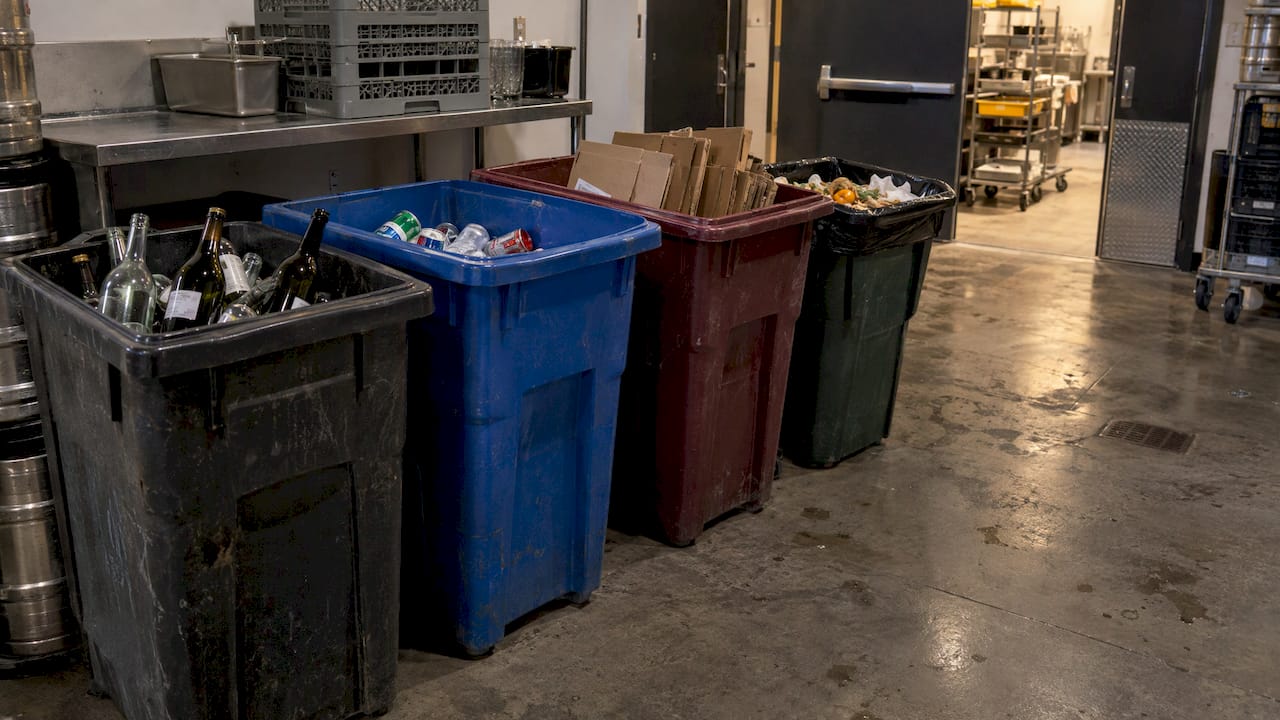
A bar waste plan is a short written document that says who handles what at the bar: which bins go where, how glass, cans, cardboard and garnish scraps are sorted, how much waste you expect, who hauls it, and who checks that it all happened. For a wedding or corporate event in Las Vegas or Henderson, it takes about an hour to draft and saves you from overflowing dumpsters, venue fees and a messy last hour of the night.
We run mobile bars in both cities, so this guide is written from the bar side of the event: what a planner or host can ask of the bartending team, and what the bartending team needs from you.
TL;DR
- Name one person responsible for waste at the bar during setup, service and breakdown, and put it in writing.
- Estimate your starting point from headcount, then ask your hauler for weights after the event so the next one is easier.
- Prevent first: bulk garnishes and mixers, reusable or recyclable serviceware, water stations, fewer single-use extras.
- Pair every trash bin with a clearly labeled recycling bin, and send liquids to a drain, never to the trash or grass.
- Confirm bin counts, dumpster locations, pickup times and venue rules before the event day, and check city rules if you are in a park.
Table of Contents
- What a bar waste plan should contain
- Start with prevention at the bar
- Estimate and track what the bar produces
- Sorting glass, cans, cardboard and scraps
- What to confirm with the venue and hauler
- Las Vegas and Henderson rules to know
- Who does what: setup, service and cleanup
- Perspective
- Plan the bar with us
- A one-page bar waste plan template
- FAQ
- Sources
What a bar waste plan should contain
The U.S. EPA’s special event guide, which draws on California’s event-waste practices, lists the same building blocks for any event waste plan: responsible coordinators, an evaluation of the event’s waste, a look at local recycling options, a collection and sorting system, and training for staff and vendors. It also calls for waste prevention strategies, a plan for leftover food donations, and a way to compile attendance and waste weights afterward.
For a bar, we turn that into a one-page plan with seven lines:
- Owner. One named person (venue manager, planner, or our lead bartender) who answers for the bar area.
- Expected volume. Guest count, hours of service, and the number of bar stations.
- Materials list. Glass bottles, aluminum cans, plastic bottles, cardboard cases, citrus and garnish scraps, ice and melt water, napkins and cups.
- Prevention steps. What you will not buy or hand out in the first place.
- Bin map. Where each bin sits at each bar, and where back-of-house bins and the dumpster are.
- Hauler and venue confirmations. Pickup times, contamination limits, reporting.
- Cleanup timeline. Who breaks down, who carries out, and who signs off.
That is it. A plan that fits on one page gets read by the bartenders, the caterer’s crew and the venue’s porters. A twelve-page plan does not.
Start with prevention at the bar
The EPA’s guide frames waste reduction as most effective when it begins with prevention, by buying less single-use material to begin with, instead of relying only on sorting after the fact. The same guide recommends buying in bulk, using reusable food-service items, serving condiments in bulk, and donating extra edible food.
On a bar, that looks like this:
- Bulk mixers and juices. Large-format containers instead of dozens of small bottles and cans. Fewer pieces to sort, fewer cases to break down.
- Bulk garnish and condiment trays. Cut fruit, cherries and olives in a single tray per station rather than individually wrapped items. Park City, Utah’s zero-waste event guide also recommends bulk condiment dispensers and water refill stations, and both ideas carry over to a Las Vegas ballroom or Henderson backyard.
- Real glassware or a clear single-use plan. If the venue provides glassware, use it. If you use disposables, choose one type of cup so staff and guests are not guessing which bin it goes in.
- A water station near the bar. In a desert climate it is good hospitality, and it keeps guests from asking the bartender for water in a fresh cup every time.
- Fewer branded throwaways. Custom napkins and stir sticks are fine when they are used up. The Park City guide suggests minimizing single-use marketing items such as banners. Branded bar fronts that get reused at the next event beat printed items that do not.
- Menu design. A tight signature menu of two cocktails plus beer, wine and a few classics means fewer open bottles, less leftover garnish, and less spoiled product.
Timing matters too. How you schedule the first hour changes how much gets poured and left behind. If you are planning a wedding, wedding cocktail hour timing is worth settling early with your vendors, because a compressed or delayed cocktail hour changes when the bar is busiest and when cups, ice and garnishes run out.
Estimate and track what the bar produces
You cannot cut what you have not measured. Keep America Beautiful’s event guidebook makes the point that assessing your starting baseline is critical if you want to plan improvements or judge whether a diversion effort worked.
There are two kinds of waste to track, and they need different tools.
Material waste: bins, bags and weights
The EPA’s guide recommends tracking the approximate number of participants, asking service providers for the pounds of each material recycled and disposed of, and using those figures as a benchmark for later events. In practice:
- Write down the guest count and hours of service.
- Ask the venue or hauler before the event whether they can report weights or at least bag and bin counts.
- After the event, record bags of trash, bags of recyclables, and any food waste or donated food.
- Divide by guests. That per-guest number is your benchmark for the next event of similar size and menu.
If the hauler cannot give weights, count full bags per bar and photograph the dumpster fill level at the end of the night. It is rough, but a rough number beats none.
Product waste: spills, spoilage and over-pours
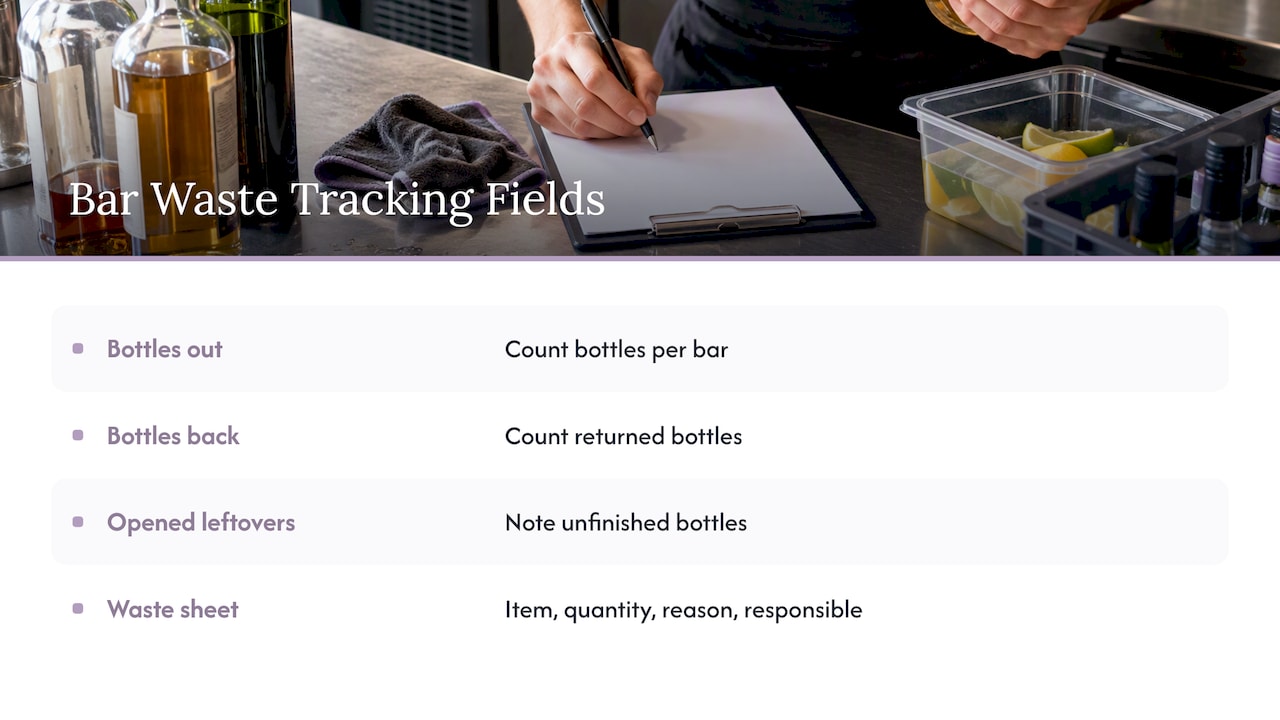
Wasted product is waste too, and it costs money. A restaurant-industry tracking guide suggests keeping a daily spill and waste sheet that records the item, quantity, reason (spoilage, customer error, spill) and who was responsible, so management can spot patterns and check ordering. The same guide stresses building a culture where staff feel safe reporting mistakes, since the numbers are only accurate if people are honest.
For mobile bars, we keep a simple count sheet per bar: bottles out, bottles back, and a note for anything opened and not finished. Digital reconciliation tools exist too, and one vendor describes per-bar nightly reconciliation for mobile bartending as a way to cut variance compared with spreadsheets. Either approach works if someone actually fills it in.
Sorting glass, cans, cardboard and scraps
Most bar waste problems are bin problems. Guests dump cups wherever they find a bin, and one wet bag of fruit scraps in the recycling can get the whole load rejected.
The Park City guide’s sorting advice is simple and works anywhere:
- Pair a recycling bin and a compost bin with every trash can to make a sorting station, and avoid stand-alone bins.
- Label every bin clearly so guests do not contaminate it.
- Pour liquids into a drain, not into the trash or onto grass.
Here is how that maps onto a bar:
| Material | Where it goes | Who handles it |
|---|---|---|
| Empty glass bottles | Back-of-bar recycling bin or crate | Bartender |
| Cans and plastic bottles | Recycling bin at the bar and at the guest sorting station | Bartender and venue crew |
| Cardboard cases | Flattened, stacked behind the bar, then to the recycling dumpster | Bartender at breakdown |
| Citrus, fruit and garnish scraps | Food-waste bin if the venue or hauler accepts it, otherwise trash | Bartender |
| Melted ice and leftover mixers | Drain or service sink | Bartender |
| Used cups, napkins, straws | Trash, unless the venue accepts the cup type for recycling | Guests and venue crew |
The key is local. Recycling and composting rules differ by hauler and by venue, so confirm what each one accepts before you label anything. A bin labeled “recycling” that the hauler treats as trash helps nobody.
Guest-facing bins at a wedding should be tucked beside the bar and the dessert table, not in the middle of a dance floor. Back-of-house bins matter even more: that is where most of the glass and cardboard ends up.
What to confirm with the venue and hauler
This is the part planners most often skip, and it is where plans succeed or fail. The EPA guide advises confirming the hauler’s ability to collect each waste stream, acceptable contamination levels, and whether it can give weight-based reports. It also advises checking the number of bins needed, dumpster locations, and pickup schedules, especially for weekend or off-hour events.
Our pre-event checklist for the venue contact:
- Where do glass and cans go, and is there a separate recycling dumpster?
- How many bins will the venue supply, and how many do we bring?
- When is the next pickup after the event? Late Saturday-night receptions often fall between pickups.
- Is there a food-waste or compost option?
- Who unlocks the dumpster enclosure and loading dock after hours?
- Can the hauler or venue report weights or fill levels?
- Are there house rules on glass at pool decks, patios or outdoor areas?
Pools in particular have their own rules about glass and alcohol, which we cover in our guide to Las Vegas pool event alcohol rules. And if your bar stock has to sit at the venue before the event, check alcohol storage at the venue so cases and empties have a clear place to live.
Las Vegas and Henderson rules to know
Most weddings and corporate events happen at hotels, ballrooms and private venues, where the venue’s own waste contract and house rules decide a lot. A few public rules are still worth knowing.
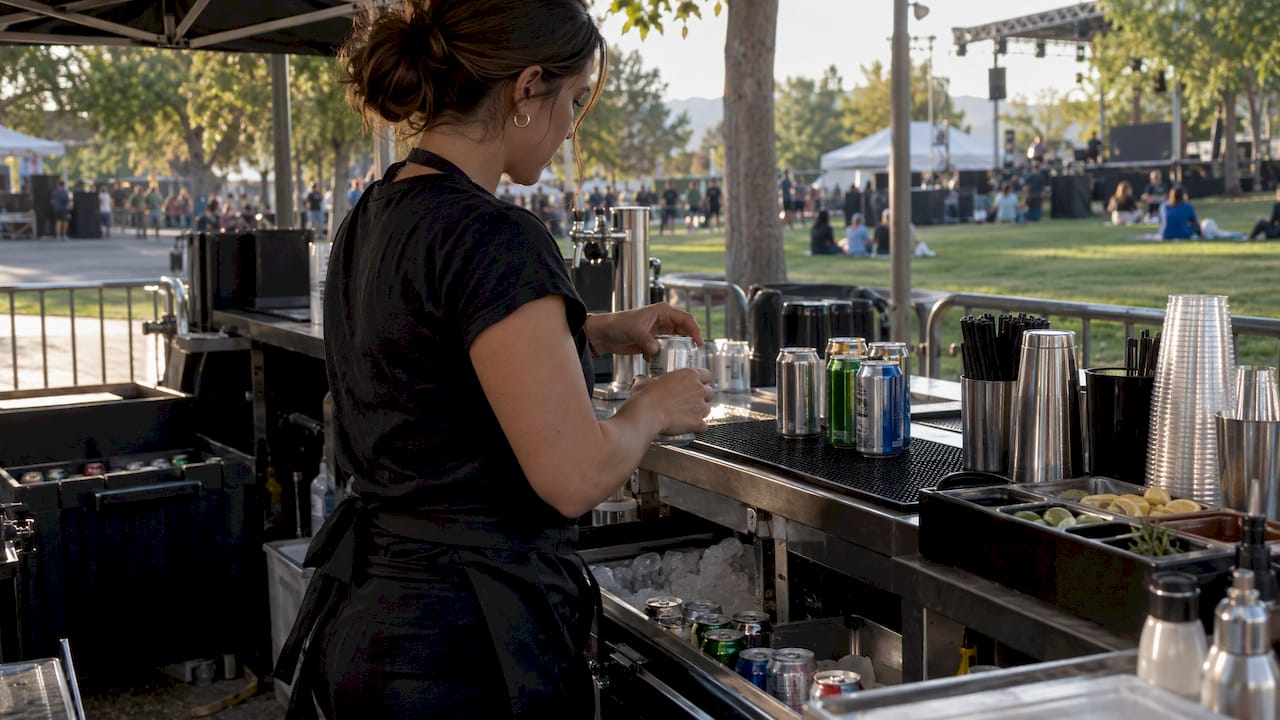
City of Las Vegas park events. The city’s park special events handbook says the permit holder is responsible for collecting and properly disposing of all event waste in designated dumpsters, that dumpsters are required for events over 500 attendees, that all waste must be bagged and removed, and that vendors may not distribute glass containers. Permit holders must also arrange extra dumpsters and place them on hard surfaces, and they are responsible for cleanup of the park and surrounding areas during and after the event. If your reception is in a city park, build your bar menu around cans and non-glass service.
Alcohol permits. The City of Las Vegas states that special-event alcohol permits require an Alcohol Control Plan, and alcohol catering at a special event requires an approved catering permit. Waste handling is not the same as an alcohol plan, but they overlap on the same site map: where the bar sits, where bins go, and how the area is supervised. Our guides on event alcohol permits in Las Vegas and alcohol catering tax in Nevada explain the permit side.
Henderson. City of Henderson special-event requirements raise the insurance minimum to $1,000,000 per occurrence when an event dispenses alcoholic beverages. Cleanup and waste duties are part of the same permit conversation, so ask the city or your venue what applies to your site.
Health district and haulers. The Southern Nevada Health District’s accommodation regulations require enough solid-waste container capacity and emptying at least twice weekly, or more often to prevent a nuisance at public accommodation facilities. That binds hotels and resorts, not your event directly, but it is a reminder that overflowing bins are a compliance issue as well as a look issue. Separately, Republic Services holds an exclusive franchise for solid-waste collection in unincorporated Clark County, so you generally cannot hire your own hauler there. Ask your venue who services the site.
What is voluntary. For a private wedding or corporate event at a venue, a detailed recycling or composting plan is usually voluntary. Clark County does have recycling and reuse goals, and its All In program notes that the Vegas Recycling Center processes more than 2 million pounds of material daily, so the infrastructure exists. Whether your venue uses it is the question to ask.
Who does what: setup, service and cleanup
A plan fails when everyone assumes someone else has the trash. Put names next to these three phases.
Setup
- Bartenders place bar-side bins and a back-of-bar recycling crate.
- Venue or planner places guest-facing sorting stations and confirms labels.
- Everyone walking in gets a thirty-second briefing: what goes where.
Service
- Bartenders break down cardboard as cases empty, so they do not pile up behind the bar.
- Someone checks the guest bins at a set interval, such as every 45 minutes, and swaps full bags.
- Spills and breakages go on the count sheet.
Cleanup
- Bartenders pour out liquids at a drain and pack up reusable items first.
- Glass, cans and cardboard go to the recycling area, trash to the dumpster.
- The lead bartender or planner does a final walk of the bar area and records bag counts.
The EPA guide also calls for training staff and vendors. With us, that means a short pre-event note to the caterer and the venue crew, since the bar’s bins are only as good as the people who empty them.
Perspective
We have spent more than 20 years running bars at weddings and corporate events across Las Vegas and Henderson, and our view is simple: the best waste plan is the one built into the bar before the event, not bolted on after it.
When we design a bar package, we think about the bin map, the garnish quantities and the breakdown timeline at the same time as the menu. Fewer open bottles, a tight signature menu, one clear place for glass and cardboard, and a lead bartender who owns the area until the last bag is out. That is what “turnkey” means to us.
We are licensed, insured and familiar with Las Vegas municipal code, and we work with venues and planners so that the bar area is handled, not just staffed. If you want your plan to hold up on a busy Saturday, ask your bartending company how they handle empties, ice and cardboard. The answer tells you a lot.
Brennon
Plan the bar with us
If you want the bar and the waste plan handled together, our team designs the bar around your venue, your guest count and your menu, with custom bar branding and venue coordination for weddings, corporate events and private parties in Las Vegas and Henderson. See our mobile bartending and liquor catering services, or look at bar rental packages if you want a branded bar that gets reused rather than thrown away.

Planning a wedding? Start with our wedding bartending services. Hosting a company event? See our corporate event bartending. Tell us your venue and headcount, and we will build the bar and its cleanup plan together.
A one-page bar waste plan template
Copy this into your planning document and fill it in:
- Event, date, venue, guest count, hours of service:
- Waste owner at the bar (name and phone):
- Number of bars and bin locations:
- Materials expected: glass, cans, cardboard, garnish scraps, cups, ice
- Prevention steps chosen: bulk mixers, bulk garnish, water station, single cup type, tight menu
- Hauler and pickup time after the event:
- What the hauler accepts (recycling, food waste):
- Glass rules at this venue:
- Cleanup lead and sign-off time:
- After-event record: bags of trash, bags of recycling, food donated, bottles opened but unfinished
Keep the filled-in sheet. At your next event of similar size, you start with a real benchmark instead of a guess.
FAQ
Do I legally need a waste plan for a wedding or corporate event in Las Vegas?
For a private event at a hotel or venue, the venue’s own waste contract usually governs, and a formal plan is typically voluntary. If you hold an event in a City of Las Vegas park, the permit holder is responsible for event waste, including dumpsters for large crowds. Check with your venue or the permitting office for your specific site.
Who is responsible for bar waste, the bartender or the venue?
It depends on your contract, so settle it in writing before the event. Many planners split it: bartenders handle the bar area, empties and cardboard, while the venue or caterer handles guest bins and the dumpster. Naming one owner for the bar area avoids gaps.
How do I estimate how much waste my bar will produce?
Start with your guest count and hours of service, then ask your hauler for weights after the event, or count full bags per bar. Divide by guests to get a per-person benchmark you can reuse. The EPA guide recommends exactly this kind of tracking so later events improve.
Can citrus and garnish scraps be composted at an event?
Only if your venue or hauler offers food-waste collection. Ask before the event, and keep scraps in a separate lined bin so they do not contaminate recycling. If composting is not available, the scraps go in the trash.
What can we do at a park event where glass is not allowed?
In City of Las Vegas park events, vendors may not distribute glass containers, so build the menu around cans and other non-glass service. Plan extra recycling bins for them and confirm dumpster placement on a hard surface.
Sources
- Special Event Best Practices Guide, U.S. EPA
- Park City zero waste event guide
- Keep America Beautiful event guidebook
- Waste tracking implementation guide
- Pourify, mobile bar event tracking
- City of Las Vegas Park Special Events Policies Handbook
- City of Las Vegas alcohol licenses information
- City of Henderson special event document
- Southern Nevada Health District accommodation regulations
- Republic Services franchise agreement, Clark County
- Clark County Diverse and Circular Economy