
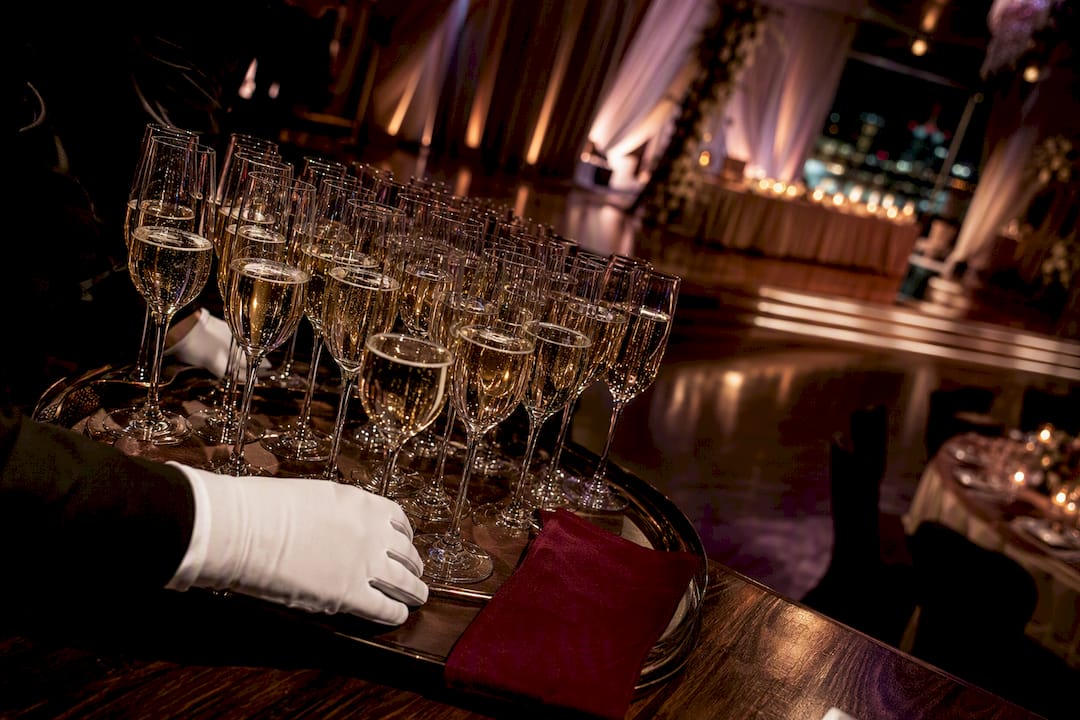
The standard toast pour is 4 ounces, which means one 750 ml bottle covers about six guests.
TL;DR:
- A 750 ml bottle provides about 12 servings at 2 ounces or six at 4 ounces, with a 10% buffer recommended for spillage and last-minute changes.
- Magnums can speed up service at tables but should be timed tightly due to pressure loss after 90 minutes.
- Keeping champagne at 45 to 48°F before and during service preserves fizziness and flavor, with bottles best chilled two hours in advance.
- Coordinating pour timing among staff and using professional bartenders prevents champagne from going flat or being poured too early.
- Non-drinkers should be offered equal-quality sparkling ciders or wines in the same glasses to maintain visual and emotional unity during the toast.
Table of Contents
- Champagne Toast Planning: The Bottle Math That Actually Works
- Which Glassware and Staffing Setup Fits Your Event?
- What’s the Right Temperature to Keep Champagne Fizzy?
- How Do You Time and Execute the Toast Itself?
- How Do You Include Non-Drinkers in the Toast?
- Your Copy-Ready Champagne Toast Order Template
- What Most Planners Get Wrong About the Champagne Toast
- Book a Bartending Team That Handles the Toast for You
- Sources
Champagne Toast Planning: The Bottle Math That Actually Works
A standard 750 ml bottle holds about 25.36 ounces, which is the number every planning calculation starts from. Divide that by your pour size and you get servings per bottle: roughly 12 pours at 2 ounces, six at 4 ounces, or four at 6 ounces. Most wedding champagne toast plans land on 4 ounces because it’s generous enough to feel celebratory but not so much that it goes flat before the speech ends.
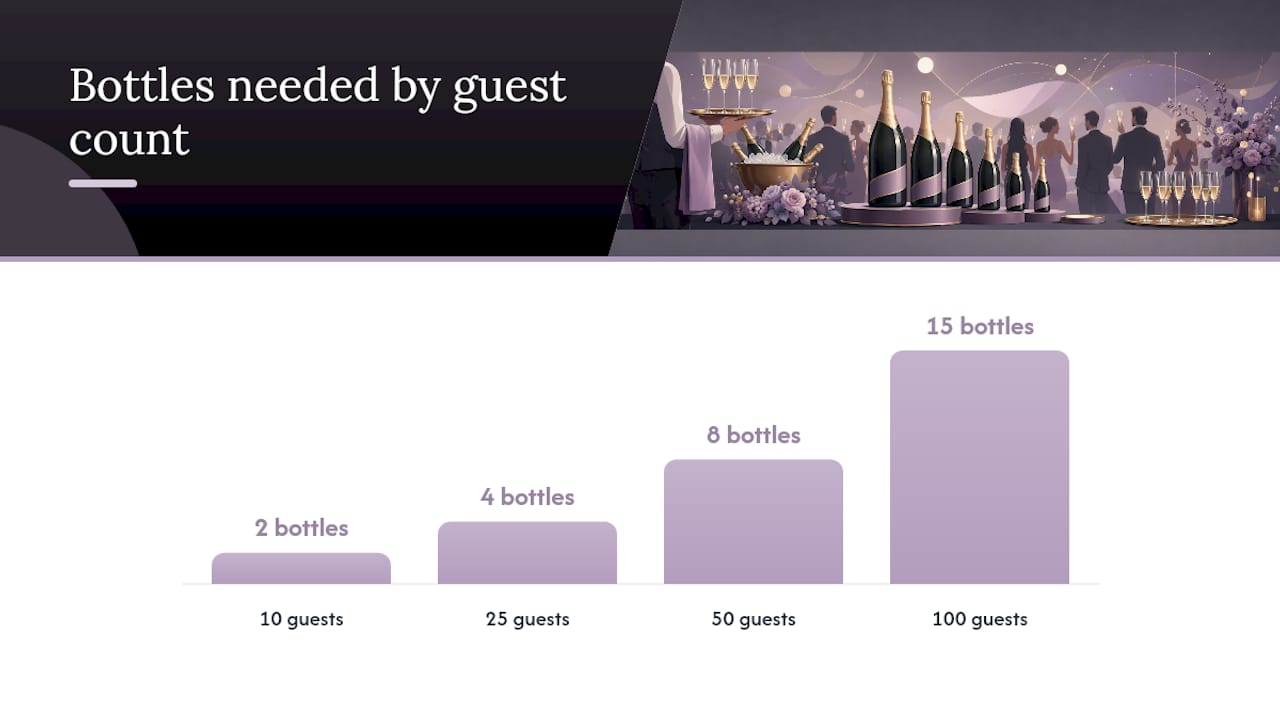
- 10 guests: 9 drinkers → 2 bottles
- 25 guests: ~23 drinkers → 4 bottles
- 50 guests: ~45 drinkers → 8 bottles
- 100 guests: ~90 drinkers → 15 bottles
Planners commonly build in a 10% buffer to cover spillage, last minute headcount changes, and the inevitable guest who wants a second pour, according to buffer guidance from event calculators.
Magnums (1.5 liters, about a dozen four ounce pours) speed up service for head table toasts or coordinated moments, since one bottle covers a whole table instead of two standard bottles. The trade off: an opened magnum loses noticeable pressure after about 90 minutes, so they work best when timed tight to the actual toast rather than sitting open during cocktail hour.
Which Glassware and Staffing Setup Fits Your Event?
Flutes remain the default for champagne toasts because their narrow shape slows carbonation loss and photographs cleanly in a row on a tray. Tulip glasses do the same job with a bit more room for aroma, and coupes look striking but let bubbles escape faster, which matters if your toast happens more than a few minutes after pouring.
A toast only pour needs far fewer glasses than a full welcome reception pour, so confirm which one you’re staffing for before you order rentals.
- Pre-poured trays: fastest distribution, best for large groups, but glasses lose fizz the longer they sit.
- Passed trays: a middle ground, servers move through the room while pours stay reasonably fresh.
- Bartenders pouring on demand: freshest champagne, slower distribution, best for smaller or seated groups.
One staffing insight worth building into your plan: assigning one dedicated staff member purely to toast glass distribution cuts mid toast crowding and keeps the room synced for the raise.
Pro Tip: If you’re pouring more than 75 glasses, stagger the pour start about 90 seconds before the toast is cued. That timing keeps the first glass poured and the last glass poured close enough in freshness that nobody’s champagne has gone flat by the time everyone raises together.
What’s the Right Temperature to Keep Champagne Fizzy?
Chill bottles for at least two hours before service and hold them at a service temperature of about 45 to 48°F, according to Food & Wine’s storage guidance. That range preserves effervescence without numbing the flavor, which matters more than most hosts realize since a warm pour goes flat visibly faster on camera.
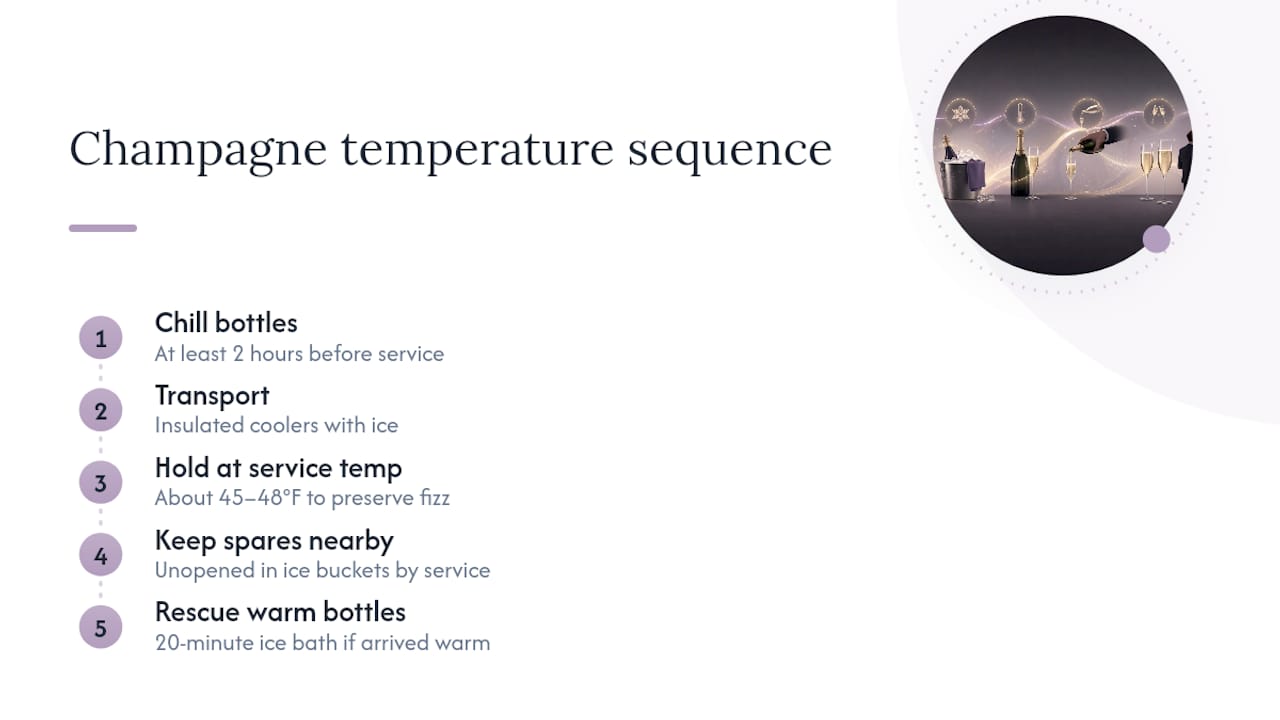
Transport bottles in insulated coolers with ice, never a hot car trunk, and keep unopened spares in ice buckets near the service point rather than in a back room. If a bottle arrives warm, an ice bath for 20 minutes gets it close enough to service temperature in a pinch. Pairing your temperature strategy with food service timing, as outlined in sparkling wine pairing guidance, helps you avoid pouring too early relative to the meal.
How Do You Time and Execute the Toast Itself?
The toast giver is usually the host, the best man or maid of honor, or an MC at a corporate event, and the choice should be locked in during the run sheet meeting, not decided on the fly.
- 30 to 10 minutes before: confirm champagne is chilled and staged, glasses are set, and the toast giver has their notes.
- 10 to 5 minutes before: servers begin pouring, AV cues the microphone, and the photographer gets positioned for the raise.
- At the signal: the MC announces the toast, the speaker delivers it, and glasses go up together.
Coordinate directly with your photographer beforehand, since capturing the actual toast moment depends on knowing exactly when pours finish and the speech starts. For outdoor events, build in a five minute weather buffer and keep spare bottles shaded, since direct sun accelerates both warming and pressure loss.
Pro Tip: Give your MC a literal hand signal, not just a verbal cue, for when pouring is complete. Rooms get loud, and a raised hand from the bar area is far more reliable than shouting “ready” across a crowd.
How Do You Include Non-Drinkers in the Toast?
Sparkling cider or a quality nonalcoholic sparkling wine gives non-drinkers a matching glass and a matching moment, which planner guides consistently recommend for keeping the toast visually and emotionally unified.
- Pour NA options into the same flutes so nothing looks different from across the room.
- Use mini bottles or single serve pours for guests who want a keepsake without committing to a full glass.
- Mark alternative bottles discreetly on trays so servers know which glass goes where without announcing it.
A quick note on your wine and beer planning for the reception overall pairs well with this approach; see this guide to selecting drinks for non-drinkers for reception-wide inclusivity strategy.
Your Copy-Ready Champagne Toast Order Template
Use this as your working order sheet with your caterer or bar service.
Fillable fields:
- Total guest count: ____
- Estimated drinker percentage (default 90%): ____
- Pour size (2, 4, or 6 oz): ____
- Buffer percentage (5 to 20%): ____
- Bottles to order: ____
- Staff needed for pour window: ____
Final checklist before the event:
- Headcount confirmed with venue or caterer
- Bottle order placed with buffer applied
- Glassware count matches drinker estimate plus 10%
- Chill schedule set for two hours minimum before service
- AV and photographer briefed on toast cue
Adding a simple drink preference question to your RSVP, a tip Chesapeake Bartenders’ calculator guidance backs up, often lowers your effective drinker estimate below the standard 90% assumption, which saves both product and cost. On-day run sheet: staff stage bottles at 30 minutes, pour starts at 10 minutes, final glasses distributed by 5 minutes, raise happens at the cue.
What Most Planners Get Wrong About the Champagne Toast
Most planning advice treats the champagne toast like a math problem, and the math matters, but the failure point I see most often isn’t a bottle shortage. It’s timing drift. Someone pours the trays 20 minutes early because the room “felt ready,” the toast gets delayed by a slow speech transition, and by the time glasses go up half the room is holding warm, flat champagne that nobody wants to drink on camera.
The fix isn’t more champagne. It’s tighter coordination between whoever’s pouring and whoever’s cueing the mic. Bars that run events regularly build that sync into their staffing, not their inventory. If you’re planning this solo, treat the pour start time as sacred as the ceremony start time, not a flexible buffer you can shift around.
— Brennon
Book a Bartending Team That Handles the Toast for You
Professional bartenders take the pour timing problem off your plate entirely. Instead of briefing a venue’s banquet staff or hoping a friend remembers the cue, you get bartenders who have experience running this exact sequence at events, coordinating pour timing directly with your MC and photographer instead of guessing at it.
Here’s what that looks like in practice: a site visit or quote call to confirm headcount and pour style, a staffing plan sized to your guest count and timeline, and glassware provided so you’re not separately renting flutes. Coordination of the pour start with your AV team and photographer ensures the raise happens on cue instead of on a guess. Get a quote for your event bartending package and lock in your toast staffing before your date fills up.
Sources
- How to store and chill Champagne | Food & Wine
- How Many Bottles Of Champagne To Buy For A Toast Calculator | Calculate This!
- Champagne Bottles for a Party Calculator|Calc