
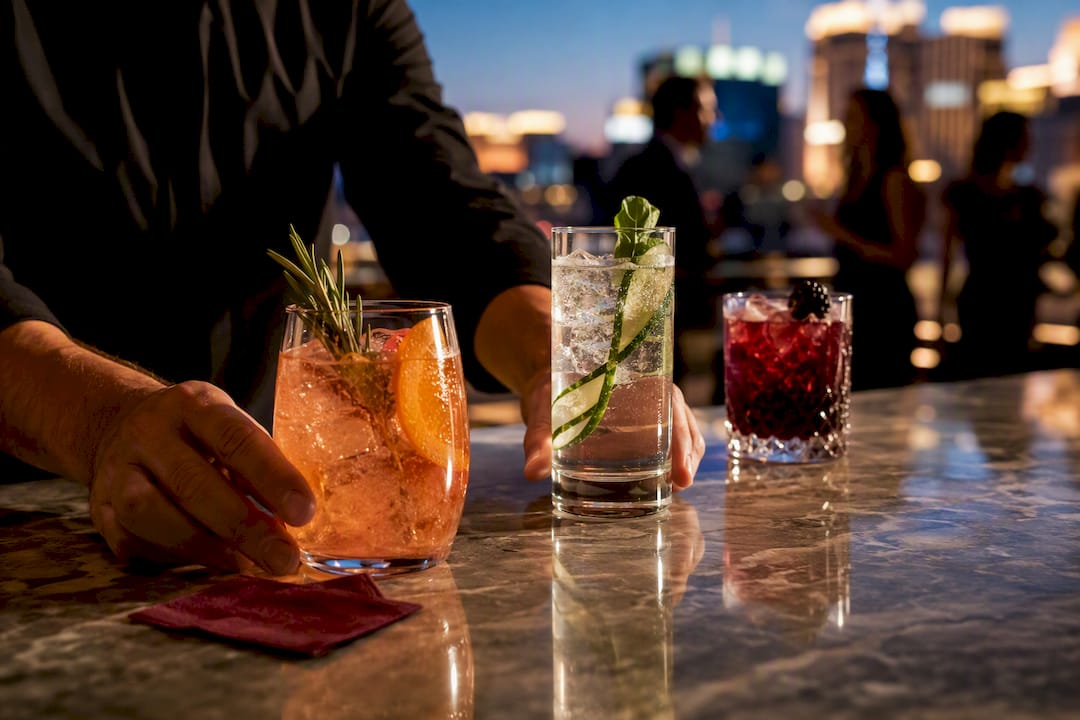
The defining shift in 2026 is intentional drinking: fewer, smaller, more deliberate pours built around low-ABV spritzes and daycaps, savory and umami flavors, local sourcing, minimalist craft, and technique-driven bartending. Nearly [34% of U.S. legal-age drinkers are shifting toward earlier, lower-alcohol occasions](https://www.bacardilimited.com/media/news-archive/connections-local-flavors-and-luxurious-experiences-top-the-2026-bacardi-cocktail-trends-report/), and bartenders are leaning into savory, umami-forward ingredients instead of sugar. For events, that means smarter menus, not bigger ones. These shifts are apparent across event bars in Las Vegas and Henderson.
TL;DR:
- Nearly 34% of U.S. drinkers are shifting to earlier, lower-ABV drinks like spritzes and Americano variations, emphasizing quality and storytelling.
- Savory and umami flavors, achieved through fermentation and chef-inspired techniques, are replacing sugar, but balancing these ingredients remains essential.
- Minimalist cocktails with three ingredients are gaining popularity for faster service and clearer flavor focus, especially using fresh, house-made components.
- Advanced techniques like clarification and rapid infusion are used mainly for quality and speed, not for elaborate spectacle, benefiting high-volume venues.
- The rise of non-alcoholic cocktails, local sourcing, international influences, and tech engagement reshape menus to prioritize intentionality and provenance.
Table of Contents
- Cocktail Trends 2026: Why Less Is Suddenly More
- Trend 1: Low-ABV Serves, Spritzes, and the Afternoon Society
- Trend 2: Savory, Spicy, and Umami-Driven Cocktails
- Trend 3: Minimalist, Craft-First Cocktails
- Trend 4: High-Tech and Technique-Forward Mixology
- Trend 5: Low- and No-Alcohol Cocktails and Mindful Drinking
- Trend 6: Localogy, Seasonal, and Terroir-Driven Cocktails
- Trend 7: Classic Revivals, Nostalgia, and Playful Riffs
- Trend 8: Presentation, Glassware, and Experience Design
- Practical Application: Turning 2026 Trends Into a Working Menu
- Liquid Courage Perspective: Applying 2026 Trends to Events
- Wine and Hybrid Cocktails
- Sustainability and Waste Reduction
- Emerging Flavor Profiles and Novel Ingredients
- Health and Wellness Beyond Low-Alcohol Options
- Tech-Driven Consumer Engagement
- Global Cultural Influences Shaping 2026 Menus
- Trends in Cocktail Serving Contexts
- Editor Perspective: What These Trends Really Mean for Drink Culture
- Bring 2026 Cocktail Trends to Your Next Event
- Sources
Cocktail Trends 2026: Why Less Is Suddenly More
The through line across every major 2026 forecast is restraint with intention. Guests aren’t drinking less because they’re bored with cocktails. They’re drinking differently because they want the drink to mean something: a better ingredient, a smaller pour, a story behind the glass. That framing matters because “cocktail trends” as a phrase gets thrown around loosely. The actual industry term bartenders and beverage directors use is cocktail programming — the deliberate design of a drink menu around season, sourcing, technique, and guest behavior. Understanding that distinction is the difference between chasing a fad and building a program that lasts past January.
Trend 1: Low-ABV Serves, Spritzes, and the Afternoon Society
Bacardi’s research names this shift the “Afternoon Society,” and the number behind it is hard to ignore: 34% of U.S. drinkers are moving their drinking earlier in the day and reaching for lighter, lower-ABV pours instead of full-strength cocktails at night. It’s less about drinking less overall and more about drinking smarter, earlier, and with lower stakes.
On menus, that shows up as:
- Spritz riffs built on aperitivo bases with soda or tonic top
- Americano-style builds with vermouth and bitters over a lower-proof spirit
- Long Negroni variations stretched with soda for a sessionable pour
For venues, the operational fix is simple: pour 4 to 5 ounce servings instead of full cocktails, price them to encourage a second round, and stagger service so the bar doesn’t bottleneck during a reception’s first thirty minutes. Coupe or wine glasses with plenty of ice keep these drinks cold longer without watering them down too fast.
Trend 2: Savory, Spicy, and Umami-Driven Cocktails
Sugar is losing ground to salt, ferment, and heat. Bartenders are reaching for fermented citrus, yuzu, doubanjiang, and miso to build savory depth that used to be reserved for the kitchen. This cross-pollination between chef technique and bar technique is one of the more genuinely new things happening in cocktails right now, not just a garnish trend.
Common tools bartenders use to hit that umami note:
- Fat-washing spirits with brown butter, bacon fat, or duck fat for a rounder mouthfeel
- Saline solutions in place of straight salt for cleaner integration
- Umami shrubs built from shiitake, tomato, or miso-infused vinegar
The trick is balance. A cocktail that tastes like a science project isn’t a trend, it’s a mistake. Good umami drinks still taste refreshing first and savory second.
Pro Tip: If you’re sourcing fermented or allergen-heavy ingredients like miso, doubanjiang, or fish sauce derivatives, list them clearly on your menu. Guests with soy or shellfish allergies need a heads-up before the drink hits the table, not after.
Trend 3: Minimalist, Craft-First Cocktails
The three-ingredient cocktail is having a real moment, and it’s not laziness, it’s confidence. Publications like EHL’s cocktail trend coverage point to a growing appetite for the “one perfect drink” over a twelve-item menu nobody can execute well at volume. Fresh juice, a single well-chosen spirit, and a bitters or amaro accent do more work than five modifiers ever could.
To simplify a menu without making it boring:
- Cut any cocktail with more than five components unless it’s a signature showpiece.
- Build two or three “hero” drinks around a single quality bottle rather than spreading thin across many.
- Use fresh citrus and house syrups instead of bottled mixers, even on the simplest builds.
- Rotate one seasonal special monthly instead of overhauling the whole menu.
A tighter list also speeds up service, which matters more than most menus admit.
Trend 4: High-Tech and Technique-Forward Mixology
Clarification, fat-washing, and rapid infusion through a technique called switching (using a whipped cream dispenser charged with nitrous oxide to force-infuse spirits with fruit, herbs, or spices in minutes instead of days) have moved from competition bars into regular rotation. Centrifugation and vacuum infusion are showing up too, mostly at high-volume cocktail bars with the equipment and staff training to support them.
Where the tech earns its place:
- Clarified juice cocktails that hold their look through a busy service without separating
- Switching for fast-batch infusions when a bar can’t wait three days for a steeped syrup
- Batch carbonation for consistent fizz across large-format service
Where it becomes theater for theater’s sake: elaborate tableside presentations that slow down a line without improving the drink. For venue managers, the honest question is whether the equipment cost and staff training pay off in speed or quality, not just Instagram footage. A smoke gun on every table is a novelty. A clarified milk punch that holds up at 200 covers is a genuine upgrade.
Trend 5: Low- and No-Alcohol Cocktails and Mindful Drinking
Non-alcoholic cocktails have graduated from an afterthought garnish drink to a full menu category with its own pricing tier. Botanical non-alcoholic spirits, shrubs, kombucha, and adaptogen-infused tonics now anchor entire sections of serious cocktail menus, not just a lonely mocktail line at the bottom.
Building blocks bartenders are reaching for:
- Botanical non-alc spirits built to mimic gin, amaro, or aperitivo bitterness
- Fruit and vinegar shrubs for acidity without alcohol’s bite
- Kombucha and other fermented bases for complexity and a little effervescence
- Adaptogen tonics (ashwagandha, reishi) layered in for a wellness angle
Pricing these drinks near $12 to $14, not $6, protects their perceived value and signals they were built with the same care as a full-proof cocktail. Gen Z drinkers and mindful-drinking guests across every age group are the ones pushing this category forward, and they notice when a mocktail is priced like a punishment for not drinking.
Trend 6: Localogy, Seasonal, and Terroir-Driven Cocktails
Bacardi’s report calls out a practice the industry is nicknaming “localogy”: treating regional sourcing as both a flavor strategy and a story. That means venues building real relationships with micro-farms and foragers rather than ordering the same syrup from a national supplier everyone else uses.
Ways smaller venues start building that program:
- Visit a farmers market monthly and build one rotating cocktail around whatever’s peaking
- Partner with a single local forager or farm for one signature ingredient rather than trying to source everything locally at once
- Make shrubs and cordials in-house from surplus or off-grade produce
- Print the source on the menu (the farm name, the region) since guests genuinely respond to provenance
Local sourcing also justifies a slightly higher price point, since guests understand that a cocktail built around a foraged ingredient costs more to produce than one poured from a syrup bottle.
Trend 7: Classic Revivals, Nostalgia, and Playful Riffs
Nostalgia is doing serious work on 2026 menus. Punch’s roundup of standout new bartenders shows drinks pulling from childhood candy flavors, retro martini variations, and cross-cultural riffs that reframe old classics with new technique.
How that shows up in practice:
- Candy-inspired syrups (think sour cherry, root beer, or bubblegum notes) folded into otherwise classic builds
- Modern martini riffs that swap the traditional garnish or vermouth ratio without abandoning the drink’s identity
- Retro cocktails like the Grasshopper or Brandy Alexander reintroduced with better ingredients and lighter proportions
The trap is gimmickry. A nostalgia cocktail only works if it still tastes balanced once the novelty wears off. Mini cocktails and tasting flights are a smart service format here, letting guests sample three playful riffs instead of committing to a full pour of something unfamiliar.
Trend 8: Presentation, Glassware, and Experience Design
Presentation in 2026 splits into two honest camps: quiet luxury and full maximalism, and the right choice depends entirely on the venue and the crowd. A hushed cocktail lounge probably wants a single, perfect coupe glass and a twist of citrus peel. A high-energy nightlife venue can lean into a smoking garnish or a dramatic pour without it feeling forced.
Presentation choices worth making deliberately:
- Match glassware to the drink’s temperature and dilution needs, not just its looks
- Choose one memorable garnish over three competing ones
- Skip single-use plastic picks and straws in favor of reusable or compostable alternatives
- Reserve theatrical elements (smoke, tableside pours) for signature drinks, not the whole menu
The goal is a drink that photographs well because it tastes good, not the other way around.
Practical Application: Turning 2026 Trends Into a Working Menu
Building a 2026-ready menu means mixing categories deliberately instead of guessing. A useful structure for bars, restaurants, and even ambitious home hosts looks like this:
- Sessionables (2 to 3 drinks): Low-ABV spritzes or Americano-style builds for the first hour of service.
- Signatures (2 to 3 drinks): One savory/umami cocktail, one local-sourced seasonal drink, one classic revival.
- High-drama options (1 to 2 drinks): A clarified or technique-forward showpiece for guests who want a moment.
- Non-alcoholic tier (1 to 2 drinks): Priced and presented with the same care as the alcoholic list.
Staff training should focus on three things before menu complexity: allergen awareness for savory ingredients, consistent pacing during peak service, and accurate portioning so low-ABV drinks stay sessionable instead of turning into full pours by accident.
On costing, a four-tier menu like this usually runs cheaper on the sessionable end (lower proof spirit, simpler garnish) and higher on the signature and showpiece end, where fresh produce, house-made syrups, or clarification equipment add real labor cost. Planners hiring out a bar for a wedding often ask about exactly this kind of tiering, which is covered in more depth in a craft cocktail wedding menu breakdown.
Pro Tip: Test your signature cocktail’s pour time under real service pressure before locking it into an event menu. A drink that takes ninety seconds to build at the bar during a slow Tuesday can take four minutes during a 150-guest cocktail hour, and that gap will build a line fast.
Liquid Courage Perspective: Applying 2026 Trends to Events
Running a low-ABV spritz program at a wedding cocktail hour works best with pre-batched bases and a staggered pour so the bar doesn’t stall right when guests arrive thirsty. Smaller standard pours, staggered service, and clear signage keep the line moving without sacrificing the “afternoon society” feel guests are increasingly asking for at earlier-day receptions.
For corporate events and private parties, interactive stations and branded cocktails do double duty: they let guests self-select their own flavor intensity while keeping staffing predictable for the bar team. A well-designed interactive cocktail station built around a local ingredient or a nostalgic riff gives guests something to talk about besides the open bar itself.
A workable event checklist looks like this:
- One bartender per 50 to 75 guests for a standard cocktail hour, tighter for interactive stations
- A timeline that front-loads sessionable drinks and saves showpiece cocktails for peak mingling time
- Package inclusions that specify glassware, garnish, and non-alcoholic options up front, not as an afterthought
Wine and Hybrid Cocktails
Wine-based cocktails are pulling weight that used to belong entirely to spirits-forward drinks. Industry roundups point to bartenders experimenting well beyond the classic spritz template, treating wine as a mixable base rather than just a topper.
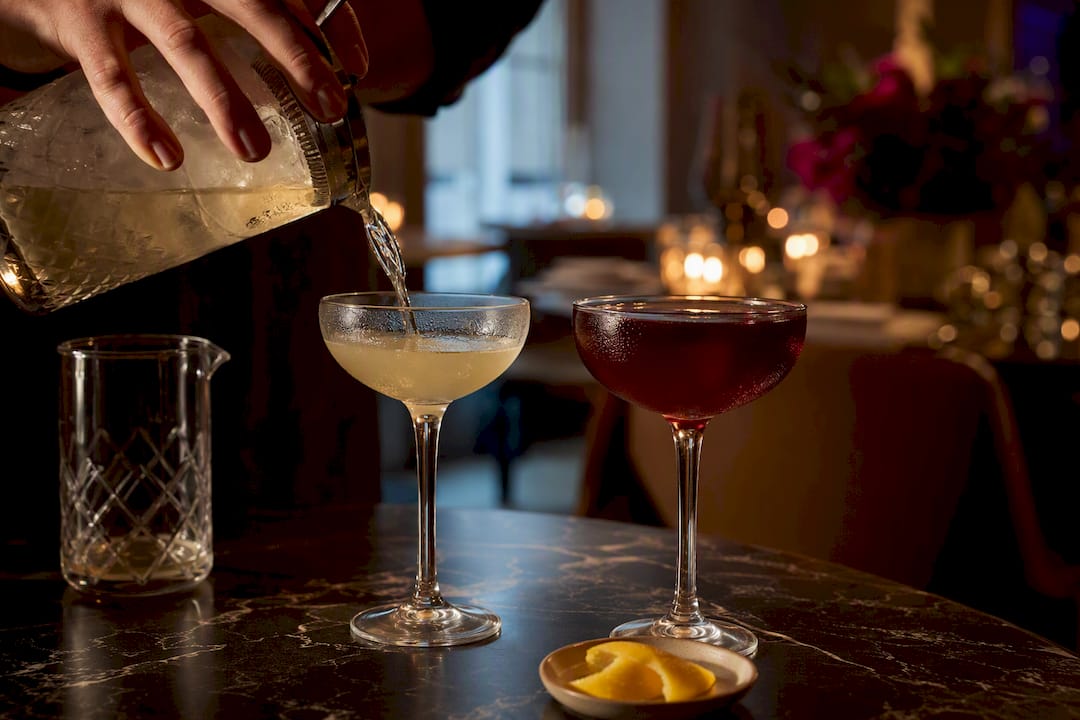
That shows up as vermouth-forward cocktails built almost entirely around fortified wine, sparkling wine stretched with amaro and citrus, and low-proof “wine sours” that swap traditional spirits for a bold red or skin-contact white. The appeal is straightforward: wine cocktails land at a lower ABV than a standard spirit-forward drink while still carrying real complexity, which dovetails neatly with the daycap and afternoon society movement already reshaping menus.
For anyone new to the category, a beginner-friendly primer like this guide to making wine cocktails is a solid starting point before experimenting behind a bar. The technical challenge with wine cocktails is balance. Wine brings its own acidity, tannin, and sweetness to the glass, so a bartender has to build around those existing characteristics instead of layering on flavors the way they would with a neutral spirit base.
For venues, wine cocktails also solve a cost problem. A bottle of mid-range wine stretched across six or eight cocktail-length pours often costs less per serving than premium spirits, while still reading as a considered, higher-effort drink. That combination of lower cost and higher perceived craft is exactly why hybrid serves are showing up on more menus heading into 2026, from casual wine bars to full-service event caterers looking to diversify beyond a standard spirits list.
Sustainability and Waste Reduction
Sustainability in 2026 cocktail culture has quietly shifted from a marketing line to an operational habit, and one framed without the lecture that used to come attached to it. Bars are building waste reduction directly into how they source and prep, not just how they talk about it.
The most common practices showing up behind the bar include:
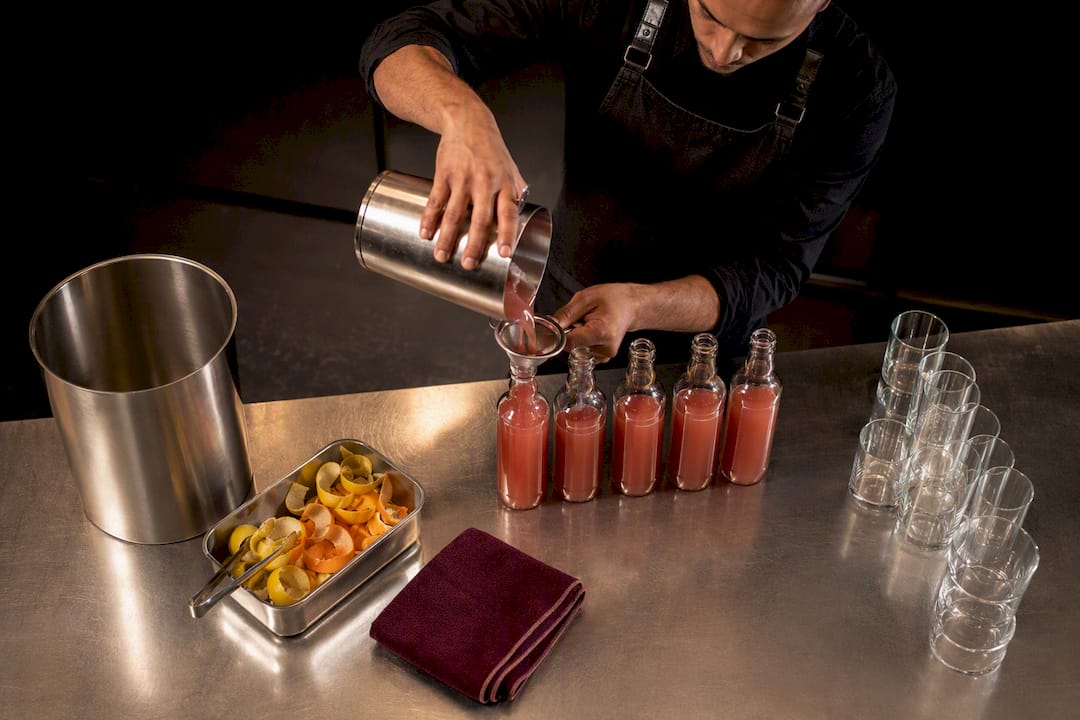
- Root-to-stem and peel-to-pulp usage, where citrus peels become oleo-saccharum and pulp becomes syrup instead of trash
- Reusable glassware and metal or biodegradable garnish picks replacing single-use plastic
- Batch-prepping syrups and shrubs from produce that’s slightly past its retail prime but still perfectly usable
- Reduced ice waste through better bar layout and smaller, denser cocktail cubes that melt slower
Local sourcing ties directly into this. A cocktail program built around a nearby farm or forager naturally produces less shipping waste and fewer packaging layers than one built on national syrup brands shipped across the country. It also gives bartenders more control over exactly how much surplus produce turns into usable syrup instead of getting composted.
For event caterers specifically, sustainability shows up in smaller, more practical decisions: right-sizing liquor orders so less goes unused after the event, choosing rental glassware over disposable cups, and batching cocktails in bulk containers instead of individually mixing every single pour, which cuts down on wasted citrus, garnish, and mixer. None of this requires a sustainability certification or a marketing campaign. It just requires paying attention to what actually gets thrown away at the end of a shift or an event, and fixing the parts that are easiest to fix first.
Emerging Flavor Profiles and Novel Ingredients
Floral and botanical ingredients are pushing past the usual elderflower and lavender into genuinely unfamiliar territory. Bartenders are working with hibiscus, chamomile, and butterfly pea flower not just for color, but for the tannic, slightly bitter edge they bring to a build that would otherwise lean too sweet.
Exotic botanicals are showing up as infused syrups and tinctures rather than whole garnishes, which lets bartenders control intensity without turning a cocktail into a floral perfume. Yuzu and calamansi are edging out standard lemon and lime in cocktails that want citrus brightness with more complexity. Sichuan peppercorn, long associated with Chinese cooking, is turning up as a numbing, slightly floral counterpoint to spicy cocktails. Green and black tea infusions are giving low-ABV drinks tannic structure that used to require a spirit to achieve.
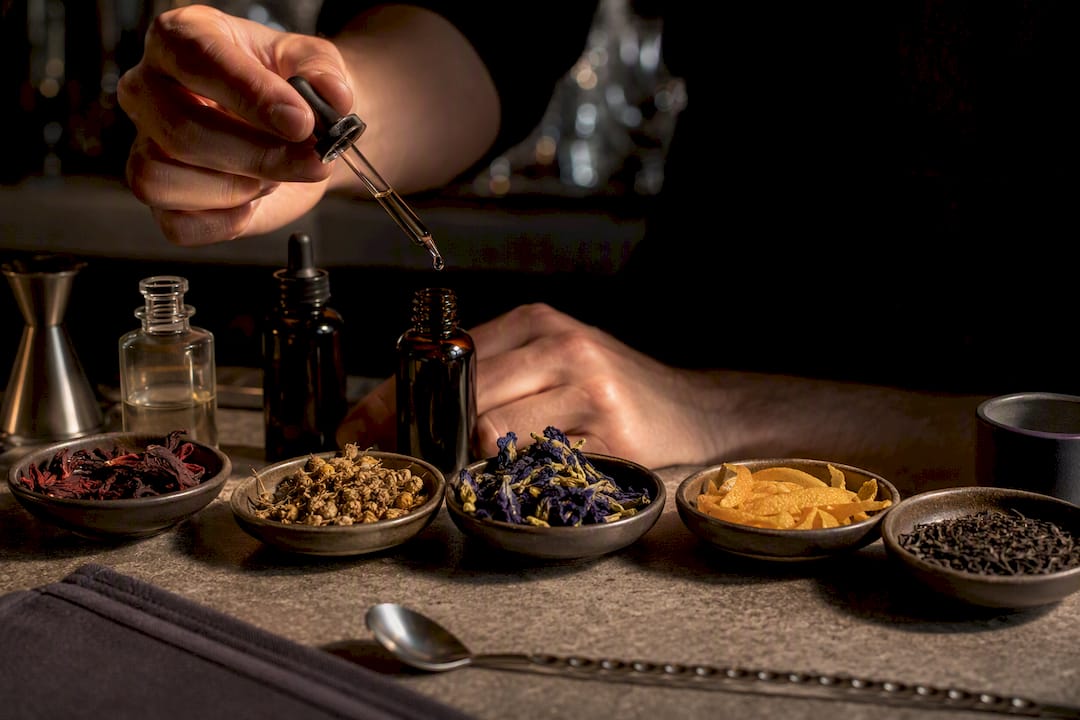
What ties these ingredients together is that they’re being used with restraint, one or two per drink, rather than piled on to signal creativity. That’s consistent with the broader minimalist push shaping 2026 menus: novel ingredients earn their place by adding a specific, identifiable note, not by making a drink look adventurous on paper. A hibiscus and gin sour with a single floral note reads as considered. A drink with five unfamiliar botanicals reads as confused, even if every ingredient is individually interesting.
Health and Wellness Beyond Low-Alcohol Options
The wellness conversation in cocktails has moved past simply cutting alcohol content. Functional cocktails, drinks built around adaptogens, vitamins, or other ingredients marketed for a specific effect, are showing up on menus next to standard low-ABV options rather than replacing them entirely.
Common functional additions include:
- Adaptogenic ingredients like ashwagandha, reishi, and lion’s mane, typically infused into a tonic or syrup base
- Electrolyte or vitamin C additions marketed toward “recovery” cocktails for daytime and brunch service
- CBD infusions, though these remain heavily dependent on local regulation and require careful labeling
- Collagen or protein additions in a small number of wellness-focused bars, borrowing directly from the smoothie and juice bar world
The honest caveat here is that most of these additions carry more marketing weight than clinical backing. A reishi tonic might taste interesting and fit a wellness-minded menu, but bartenders and venues should avoid promising specific health outcomes from a cocktail ingredient dosed in the amount a single drink can hold. The safer framing, and the one most credible bars are using, is “wellness-inspired” rather than “functional” in any medical sense. Where alcohol content and functional ingredients combine, the same mindful-drinking framing that applies to low-ABV cocktails should apply here: guests deserve clear ingredient information, not vague wellness claims.
Tech-Driven Consumer Engagement
Technology’s role in cocktail culture in 2026 has moved from the back bar to the guest-facing side of the experience. AI-driven recommendation tools are starting to appear in some bar apps and hospitality platforms, suggesting a cocktail based on a guest’s stated preferences (sweet versus bitter, spirit-forward versus light) the same way a streaming service recommends a show.
Augmented reality is a smaller but growing presence, mostly in flagship bars and brand activations, where a guest can scan a menu item to see how a cocktail was built or where its ingredients came from. That kind of transparency plays directly into the localogy and provenance trends already reshaping menus, giving guests a digital layer on top of a physical drink.
For most venues, though, the more practical version of tech engagement is simpler: digital menus that update in real time as seasonal ingredients change, QR-linked sourcing information for local ingredients, and social-friendly presentation designed with a phone camera in mind. The bars getting the most value from technology right now aren’t the ones chasing the flashiest gadget. They’re the ones using tech to communicate what’s already good about the drink, whether that’s where an ingredient came from or how a technique-forward cocktail was built.
Global Cultural Influences Shaping 2026 Menus
Cocktail menus in 2026 are pulling far more directly from international spirits and technique traditions than the somewhat narrow “world cocktail” trend of years past. Japanese bartending precision, particularly hard-shaken dilution control and ice carving, has influenced how bars across other regions approach texture and clarity in a cocktail.
Southeast Asian flavors are showing up well beyond the expected lemongrass and ginger, with ingredients like galangal, kaffir lime, and tamarind appearing in both spirit-forward and low-ABV builds. Latin American spirits, mezcal and pisco especially, continue gaining menu space as bartenders move past tequila as the only agave spirit worth featuring. West African and Caribbean influences are showing up through spiced rum riffs and hibiscus-forward drinks that borrow from traditional non-alcoholic beverages in those regions.
The common thread across all of this isn’t novelty for its own sake. It’s technique and ingredient borrowing done with actual understanding of where a flavor or method comes from, tied back to the same provenance-focused mindset driving the local sourcing trend. A cocktail program that treats a Sichuan peppercorn tincture or a mezcal base as a genuine technique choice, rather than a passing garnish, is doing the same intentional work as a bar building a menu around a local forager’s seasonal haul.
Trends in Cocktail Serving Contexts
Where and how guests actually get their cocktails has diversified significantly. Cocktail delivery services, once a novelty in a handful of major cities, have become a standard offering for bars looking to extend revenue beyond their physical footprint, typically through bottled or canned versions of signature drinks rather than anything requiring last-minute assembly.
At-home mixology kits have grown alongside this, giving guests pre-measured ingredients and instructions to recreate a bar’s signature cocktail without needing a full home bar setup. These kits work particularly well for gifting and for extending a bar’s brand into a guest’s home between visits.
Experiential bars, pop-ups, immersive theme bars, and limited-run collaborations, continue drawing guests who want the cocktail tied to a specific memorable event rather than a routine night out. For event planners and hosts, this same experiential instinct scales down easily: an interactive cocktail station at a private party or corporate event borrows the same “make it an experience, not just a drink” logic that’s driving pop-up bars in major cities. The through line across all these serving formats is the same one running through the rest of 2026’s cocktail landscape: guests want the format of the drink, not just its flavor, to feel deliberate.
Editor Perspective: What These Trends Really Mean for Drink Culture
Strip away the ingredient lists and technique names, and 2026 comes down to one idea: intentionality. Guests are choosing fewer drinks and demanding more from each one, whether that’s a story about where the ingredients came from, a technique that actually improves the glass, or simply an honest lower-ABV option that doesn’t feel like a consolation prize. That’s a real shift in how people socialize around drinking, not just a menu redesign.
The trends most likely to stick past 2026 are the ones solving a real behavior, low-ABV daycaps, savory balance, local sourcing, rather than the ones solving for a photo. Functional cocktails and nostalgia riffs will keep evolving, probably getting more specific rather than more novel. If there’s one thing worth watching closely, it’s whether the wellness angle matures into something credible or stays mostly marketing. Readers who’ve spotted a trend brewing at their own local bar before it hit a national report have genuinely useful intel worth sharing with anyone building a 2026 menu.
— Brennon
Bring 2026 Cocktail Trends to Your Next Event
Reading about savory cocktails and localogy is one thing. Executing them at a 150-guest wedding without a service bottleneck is another. Some event bartending companies build bar programs around these 2026 trends for weddings, corporate events, and private parties in Las Vegas and Henderson, translating trend reports into menus that run smoothly behind the bar.
That means low-ABV spritz stations that keep pace without a line, branded cocktails built around a client’s story, and interactive setups guests remember after the event ends. Planners can start with the event bartending hiring guide to see how packages come together, or look at branded cocktail options for corporate events for a company party. Couples planning a wedding bar can check the wedding beverage catering guide for package details specific to Las Vegas venues. Reach out for a quote and Liquidcouragelv will help map this year’s cocktail direction onto a menu built for the actual guest count and timeline.
Sources
- Bartenders’ next big cocktail flavors for 2026
- Cocktail Trends: Drink Ideas to Lift Your Spirits in 2026
- 10 Cocktail Recipes From the Best New Bartenders of 2026 | PUNCH