
A clean bar breakdown follows a fixed order: stop service, secure the alcohol, clear glass and trash, wash, rinse and sanitize every surface and tool, pack out, then walk the space with the venue contact. In Las Vegas and Henderson, the sanitizing steps follow Southern Nevada Health District (SNHD) guidance, and the handover is usually what decides whether a venue is happy with you. This guide covers each step, who should do it, and what to settle in your contract before the event starts.
TL;DR
- Work in order: last call, secure alcohol, remove glass and waste, wash, rinse, sanitize, air-dry, pack out, walk through with the venue.
- SNHD’s sequence is hot soapy water, a clear-water rinse, sanitizer for the full contact time, then air-drying. Sanitizer does not work on a dirty surface.
- Broken glass goes into a dustpan with a broom, never into bare hands. Knives never sit in a sink.
- Ask your bartending company in writing who handles breakdown, trash, and glass removal, and what the venue expects.
- Finish with a walkthrough with the venue manager so nothing is disputed later.
Table of Contents
- Who is responsible for the bar after the last drink
- Before the event: set up so cleanup is faster
- The breakdown sequence, step by step
- The handover walkthrough
- If your event has a temporary food or special event permit
- Peace-of-mind questions to ask your bartending company
- Our perspective
- Let us handle the bar from setup to breakdown
- FAQ
- Sources
Who is responsible for the bar after the last drink
Planners often assume cleanup belongs to the venue, the caterer, or the bartender, and each assumes it belongs to someone else. Settle it before the event. There are usually three separate jobs:
- The bar itself. Back bar, service top, tools, ice bins, garnish trays, sinks, and any rented bar units.
- Guest-area mess. Cups and bottles on tables, spills on the floor, napkins, and trash around the bar.
- Venue-level cleaning. Restrooms, carpets, furniture reset, and the final sweep.
A bartending team normally owns the first job. The second and third depend on the venue contract and the vendors you hired. Many Las Vegas venues have their own house-cleaning crew and a list of what outside vendors must leave behind. Ask the venue coordinator for that list, and put the answers into your bartender agreement. If you are comparing agreements, our wedding liquor catering contract checklist shows the kind of line items worth confirming.
Before the event: set up so cleanup is faster
The best cleanup starts when the bar is built. A few decisions in the planning stage save an hour at the end.
- Put the bar where trash and ice can leave easily. The route from the bar to the loading area should be short and clear. Our guide to bar station layout for Las Vegas events covers placement, and the load-in logistics page has slots and templates you can copy for load-out timing too.
- Stage waste containers early. Separate bins for trash, glass, and recyclables are far easier to set up at the start than to sort at 1 a.m.
- Know your storage situation. If alcohol stays in a locked room or goes back with the bartender, decide that in advance. See verifying alcohol storage at the venue.
- Confirm the load-out window. Venues set when vendors may access docks and elevators. Confirm it, and schedule breakdown labor for that window, not for whenever guests leave.
- Put it on the plan. Clark County’s special events security and safety plan form asks organizers to identify beverage stations, handwashing sinks, waste receptacles, exits, fire lanes, and an on-site contact. Even at a private event with no county plan, that is a good list to work from.
The breakdown sequence, step by step
1. Close service and secure the alcohol
Announce last call to the host, then stop pouring. Once service ends, count and secure open and sealed bottles before anyone starts moving equipment. Leftover alcohol should go to whoever owns it under the contract, and it should be locked or packed before it travels anywhere. This is also when the permit conditions matter: if your event runs under a permit, the leftover-alcohol handling should match what you filed. Our pages on event alcohol permits in Las Vegas and off-premise liquor permits in Nevada explain the permit side.
2. Clear what holds liquid
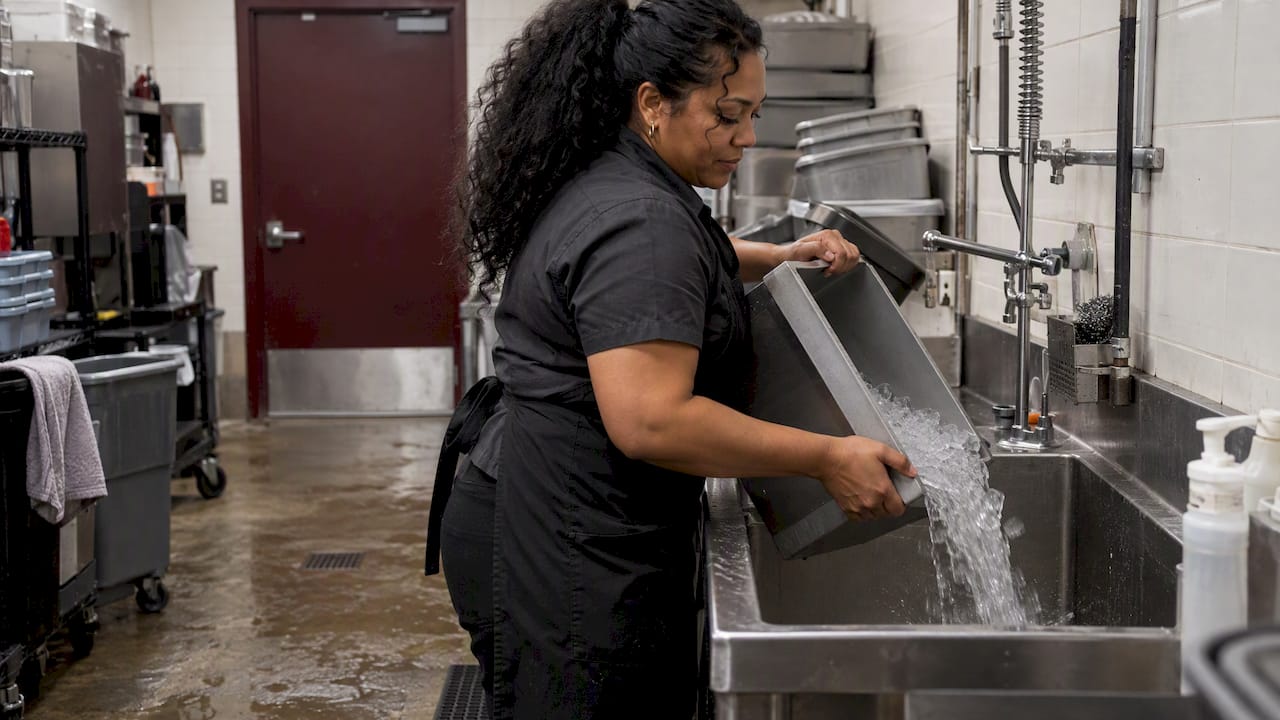
Start with anything that holds liquid or temperature: ice wells, melted ice bins, juice and mixer containers, and drip trays. Draining these first keeps floors dry, which protects both people and the venue’s flooring. Pour dirty water only where the venue allows, such as a service sink or mop sink. Never use a handwashing sink for it. Ask the venue where that is before the event ends.
3. Handle glass and sharps carefully
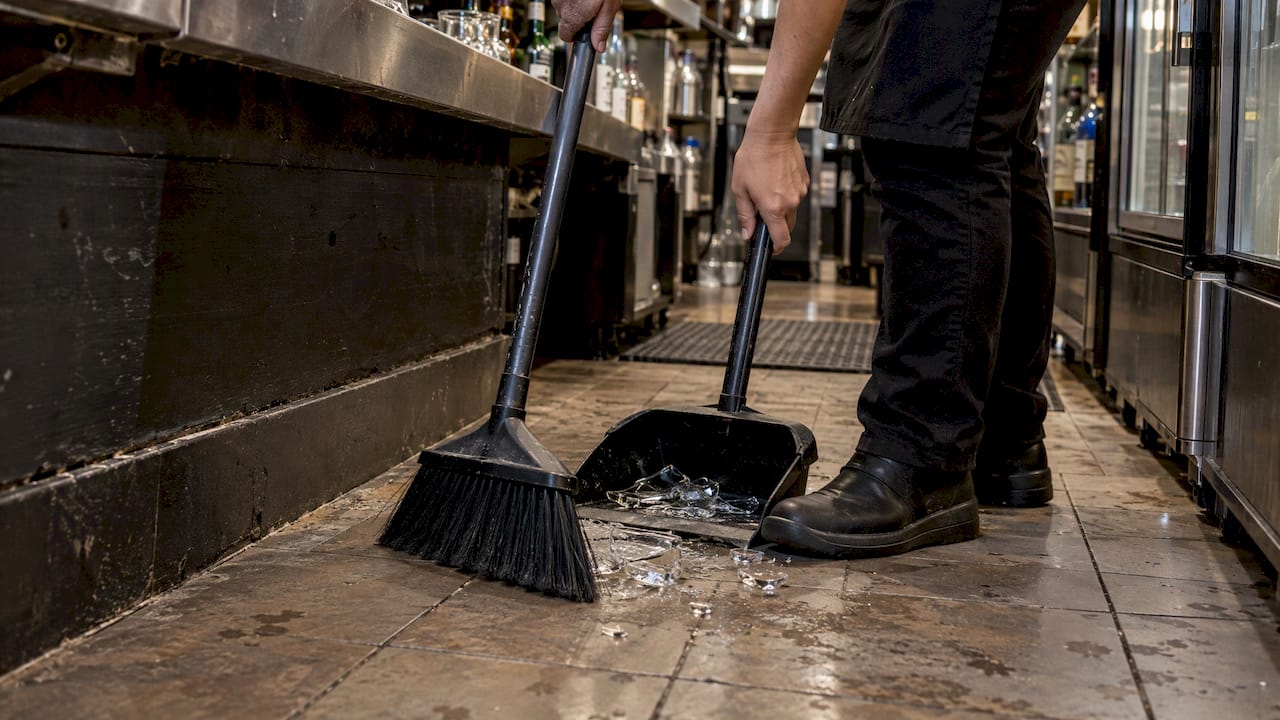
Broken glass is where most breakdown injuries come from. OSHA’s restaurant safety guidance says to wear the protective equipment your employer provides and remove broken glass with a broom and dustpan, never with your hands. The same page warns against leaving knives in a sink between uses, since someone may reach in and be cut. Clean them right away or put them in a container marked for knives only.
If a spill or break involves blood, the rules are stricter. OSHA’s bloodborne pathogens standard requires surfaces contaminated with blood or other potentially infectious material to be decontaminated with an appropriate disinfectant immediately or as soon as feasible, and contaminated broken glass must be picked up with a brush and dustpan, tongs, or forceps. Contaminated sharps go into closable, puncture-resistant, leakproof, labeled or color-coded containers. If that happens at your event, tell the venue manager and the bartending lead, and do not let a guest or untrained helper clean it up.
4. Sort waste
Separate glass bottles, cans, plastic, cardboard, and general trash as you go. Clark County says correct recycling reduces energy and raw-material use, and that the Vegas Recycling Center processes more than 2 million pounds of material daily. A weddings or corporate event produces a lot of glass and cans, so a few clearly labeled bins make a real difference. Rinse bottles and empty cups of liquid before bagging them, because wet, heavy bags tear on the way to the dumpster. Ask the venue which dumpsters outside vendors may use. Some venues forbid it and charge for haul-away.
5. Wash, rinse, sanitize, air-dry
This is the step people shortcut, and it is the one with an official procedure. SNHD describes cleaning as removing food, soil, and debris, and sanitizing as the step that follows to reduce illness-causing germs to acceptable levels. The sequence:
- Scrub with hot, soapy water.
- Rinse with clear water.
- Apply an approved sanitizer at the correct concentration.
- Leave it for the full contact time the label requires.
- Let it air-dry.
Two details matter. First, soil must come off before sanitizing, or the sanitizer cannot do its job. Second, test the concentration of your sanitizer solution with test strips where appropriate, rather than guessing by eye. Wiping surfaces dry with a towel right after spraying cuts the contact time short and can put germs back.
SNHD also notes that food-contact surfaces must be cleaned between uses, or at least every four hours during continual use. At a long event, that is a reason to refresh cutting boards, garnish trays, and the service top during the night instead of leaving everything for the end.
6. Clean tools and equipment
Bartenders typically clean these items before they pack them:
| Item | What to do |
|---|---|
| Shakers, strainers, jiggers, spoons | Wash, rinse, sanitize, air-dry on a clean rack |
| Cutting boards and knives | Wash and sanitize; knives never soak in a sink |
| Garnish trays and bar caddies | Discard perishables, wash, rinse, sanitize |
| Ice bins and scoops | Drain, wash, rinse, sanitize; scoops never rest in the ice |
| Bar mats | Lift, rinse off sugar and syrup, wash, air-dry |
| Bar top and back bar | Clear bottles and debris, wash, rinse, sanitize |
| Rented bar units | Remove stickiness and residue before pickup to avoid damage charges |
| Dispensers and pour spouts | Take apart, wash, rinse, sanitize, air-dry |
Sugar, juice, and syrups are the real enemies of a bar surface. They dry sticky, attract pests, and leave residue on rental pieces. Wipe them off while still wet.
7. Pack out and load the vehicle
Pack dry. Putting damp tools into closed bins is how you get odors and mold in the next event’s kit. Load heavy and breakable items first, bottles in dividers, and keep a small cleaning kit available at the venue until the final walkthrough is done. Our dress code and backup kit guide lists the supplies a professional team carries, which gives you a template for what should come back out with them.
The handover walkthrough
The last ten minutes decide whether the venue releases the deposit without a dispute. Walk the space with the venue manager or the on-site contact, and check:
- Bar area floor: dry, no sticky patches, no glass fragments.
- Bar top and any venue furniture used: clean and free of rings or residue.
- Sinks and drains used by the bar: free of garnish, ice, and debris.
- Waste: all bags gone or in the agreed container, glass and recyclables in the right place.
- Venue items: any glassware, linens, or tables borrowed from the venue accounted for.
- Damage: anything scratched, stained, or broken noted and agreed on the spot.
Take a few photos of the bar area when you finish, with the manager’s okay. A timestamped photo of a clean bar settles a lot of arguments later.
SNHD’s checklist for reopening after a closure gives a useful picture of what a clean, ready station looks like: kitchenware, equipment, dishware, and utensils washed, rinsed, sanitized, and air-dried, working hot and cold water, operating hand sinks, and sanitizer buckets at the right concentration. That checklist is written for food establishments, not wedding bars, but it is a good yardstick for a professional standard.
If your event has a temporary food or special event permit
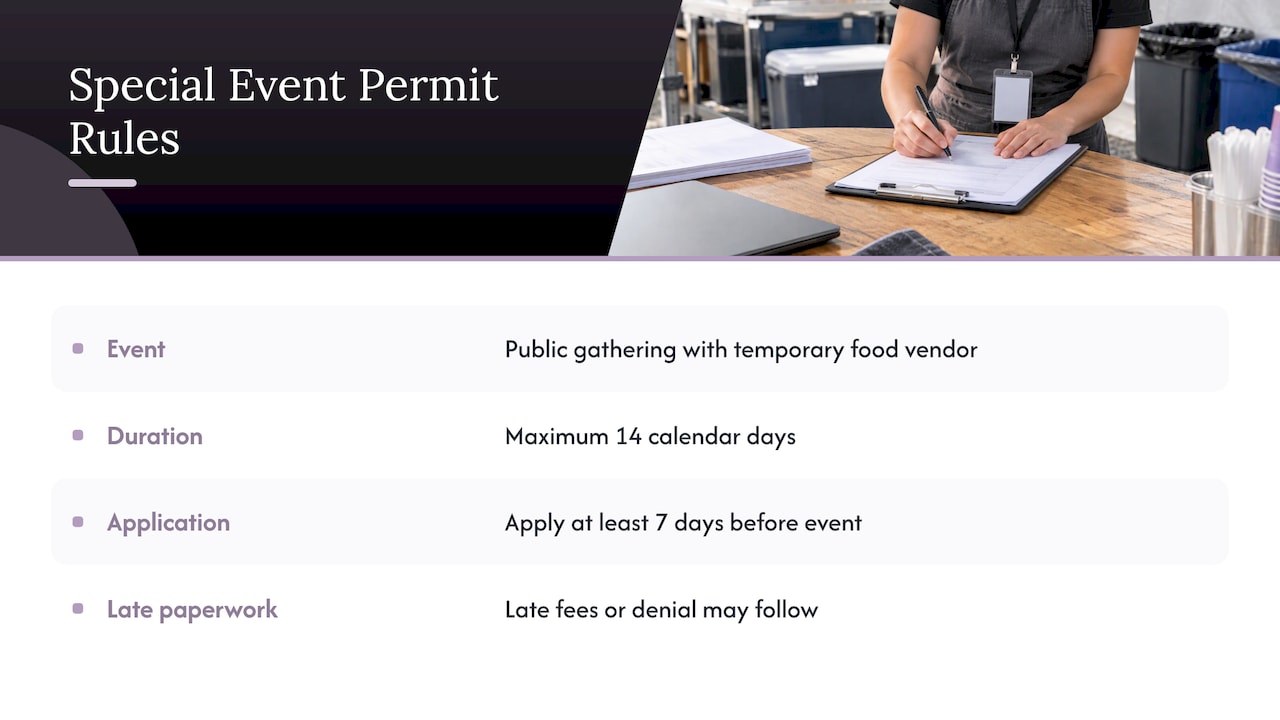
Some larger events, such as festivals or public gatherings with food vendors, fall under SNHD’s special event rules. SNHD defines a special event as a temporary public gathering with at least one temporary food establishment or food vendor, with defined start and stop dates not exceeding 14 calendar days. Applications should be submitted at least seven calendar days before the event, and late fees or denial can follow for late or incomplete paperwork. Most weddings and corporate parties do not meet that definition, but if yours does, ask SNHD about the cleanup and sanitizing conditions that apply to your permit. Check the official page for current requirements before you plan.
Peace-of-mind questions to ask your bartending company
When you compare providers, use these questions. They apply to any company, including ours.
- Who breaks down the bar, and is that time included in the quote?
- Who removes bottles, glass, and trash from the bar area, and where does it go?
- What does the venue require from outside vendors at load-out?
- How are leftover alcohol and unopened bottles handled?
- Is the team insured, and does that cover venue damage?
- Will someone join the venue walkthrough?
If a vendor cannot answer in plain terms, the cleanup will likely be improvised. For dry-hire arrangements, where you supply the alcohol and hire staff only, these questions matter even more, so see how dry hire venues in Las Vegas change permit and staffing details.
Our perspective
Cleanup is part of the bar, not an afterthought. After more than 20 years of working Las Vegas and Henderson events, we think a bar is only finished when the space is handed back the way the venue gave it to you.
That is why we plan the end of an event at the same time as the start: where the bar stands, where the trash goes, how glass is handled, and when the venue expects vendors out. Our packages are built around turnkey service and compliance with local rules, and we work with the venue’s requirements so the planner is not left chasing details at midnight.
Our advice to planners is simple. Ask for the breakdown in writing, ask about the walkthrough, and choose a team that treats both as normal. Professional staff, licensing, and insurance are not extras at a wedding or corporate event. They are what let you leave the room while the bar comes down.
Brennon
Let us handle the bar from setup to breakdown
If you are planning a wedding, corporate event, or private party in Las Vegas or Henderson and want one team responsible for the bar from first pour to final walkthrough, talk to us. We offer mobile bartending and liquor catering, custom bar rentals, and staffing for weddings and corporate events, with menu and bar branding options.

Tell us the venue and the date, and we will confirm what breakdown looks like for your event. You can also look at our wedding events and corporate events pages.
FAQ
Who is responsible for cleaning the bar after an event?
Usually the bartending company cleans and packs its own bar, tools, and rentals, while the venue or a cleaning crew handles floors, restrooms, and furniture. The contracts decide it, so ask in writing. The venue’s vendor rules may add duties such as trash removal.
What do bartenders use to clean and sanitize a bar?
They follow the same sequence SNHD describes: hot soapy water to clean, clear water to rinse, approved sanitizer at the correct concentration for its contact time, then air-drying. Test strips help confirm the concentration.
How should broken glass be cleaned up at an event?
Use a broom and dustpan and wear the protective gear provided, never bare hands. Keep broken glass in a separate, sturdy container so it does not tear trash bags. If blood is involved, the area needs disinfecting with an appropriate disinfectant and trained handling.
How long does bar breakdown take?
It depends on the size of the bar, the number of stations, and the venue’s access. A small single bar is often quicker than a multi-station reception, and load-out windows can limit your time. Ask your bartending company for an estimate for your layout, and book the venue’s load-out window to match.
Can I leave leftover alcohol at the venue?
Only if the venue and your contract say so. Leftover alcohol should be secured and assigned to a responsible owner, and it should follow any permit conditions. Confirm this before the event, not at the end.
Sources
- Cleaning and Sanitizing, Southern Nevada Health District
- Re-Opening Checklist, Southern Nevada Health District
- Special Events, Southern Nevada Health District
- Special Events Security and Safety Plan Supplemental, Clark County
- Young Worker Safety in Restaurants: Clean-up, OSHA
- 1910.1030 Bloodborne pathogens, OSHA
- Diverse and Circular Economy, Clark County All In