

For most events, the standard pour is 12 ounces of beer, 5 ounces of wine and 1.5 ounces of liquor per drink. Those three numbers come from the U.S. definition of a standard drink. Your bar plan, your bottle count and your bartenders’ habits should all be built on them. The rest of this guide covers where the numbers come from, where they stop applying, and how to set pours for a wedding, a corporate reception or a tasting.
TL;DR
- A U.S. standard drink holds about 14 grams of pure alcohol: 12 oz of beer, 5 oz of wine or 1.5 oz of 80-proof spirits.
- A “serving” is not always one standard drink. Big glasses and heavy hands turn one serving into two drinks.
- Tasting pours are smaller: 0.5 to 2 oz of wine and 0.25 to 0.5 oz of spirits, depending on ABV.
- Fix the pour in writing, and make bartenders use a jigger or measured pourer so the last guest gets the same drink as the first.
- For budgeting, assume about one drink per drinking guest per hour, then adjust for crowd and weather.
Table of Contents
- The numbers behind a standard pour
- A standard drink is not the same as a serving
- How pour size changes by drink type
- Tasting pours for wine and spirits
- How bartenders actually measure a pour
- Planning bottles from pour sizes
- Setting pour rules for Las Vegas and Henderson events
- Our perspective: pour size is a promise to the host
- Let us handle the measuring
- Common mistakes to avoid
- FAQ
- Sources
The numbers behind a standard pour
The National Institute on Alcohol Abuse and Alcoholism (NIAAA) defines a U.S. standard drink as one with about 14 grams of pure alcohol, or 0.6 fluid ounces. In practice, that is 12 ounces of beer at about 5 percent, 5 ounces of wine at about 12 percent, or 1.5 ounces of distilled spirits at about 40 percent.
Here is the same information as a working chart for the bar:
| Drink | Standard pour | Roughly equals |
|---|---|---|
| Beer (about 5% ABV) | 12 oz | One can or bottle |
| Wine (about 12% ABV) | 5 oz | One restaurant-style glass |
| Spirits (about 40% ABV) | 1.5 oz | One shot, or the base of a simple highball |
A 750 ml wine bottle holds about 25.4 ounces, so it gives you roughly five 5-ounce glasses. That is the number to use when you convert guests into cases. A 1-liter bottle of spirits holds about 33.8 ounces, which is about 22 pours at 1.5 ounces before you account for spillage and shaker waste. Plan on fewer in real life.
A standard drink is not the same as a serving
The most common planning mistake is treating the two terms as the same thing. NIAAA’s number is a unit of measurement. A serving is whatever ends up in the glass.
Think about a few common event drinks:
- A large wine goblet filled generously can hold 8 or 9 ounces, which is closer to two standard drinks than one.
- A craft IPA at 7 percent in a 16-ounce pint is more than one standard drink.
- A cocktail built with two shots of spirit plus a float is two drinks wearing one glass.
If your plan says “one drink per guest per hour” and your bar quietly pours 1.5 times that, you run out of stock and your guests drink more than you thought. Both outcomes are problems, so the plan should state the pour size and the bar should follow it.
How pour size changes by drink type
Spirits and cocktails
The 1.5-ounce pour is the unit for spirits. Most single-spirit drinks, such as a vodka soda, a rum and Coke or a whiskey on the rocks, use one pour. Many house cocktails use more than that, and that is a menu decision you should make deliberately. If a signature cocktail contains two ounces of liquor, price it, count it and portion it as such, and don’t assume it equals one drink on your chart.
High-ABV pours need extra care. Event producers are advised to calibrate pours to alcohol by volume, which means smaller pours for spirits and fortified wines. That matters for liability as well as for guests’ safety.
Wine
Five ounces is the standard. Several wine retailers and educators say the same, and many guests will be surprised how modest that looks in a large glass. Fill a wine glass to about its widest point at most. A glass that looks half empty to a guest is usually the correct pour, and it leaves room for the wine to breathe.
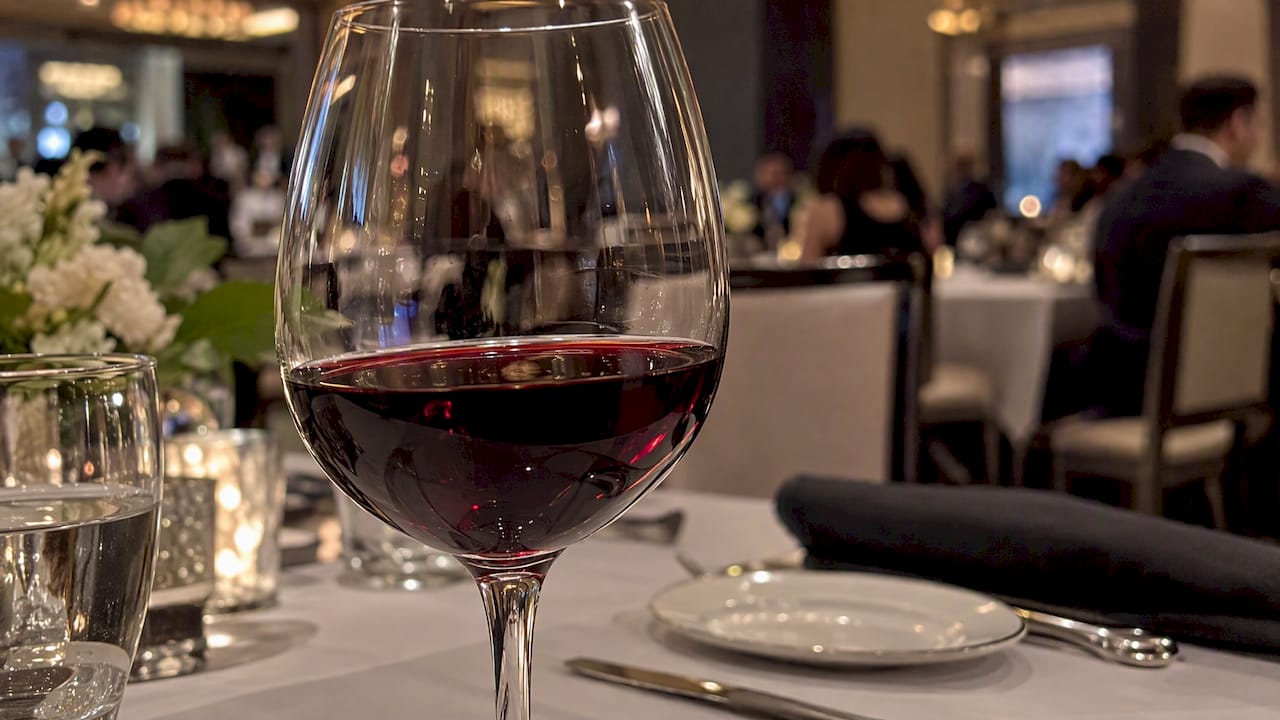
For a dinner with wine service, you can use the five-glasses-per-bottle rule. For a reception where guests move between beer, wine and cocktails, it is safer to assume slightly fewer glasses per bottle, because pours drift upward over a long night.
Beer
Beer is the easiest to standardize because the container sets the pour: 12 ounces in a can or bottle. Draft is where it slips, as cup sizes of 16 ounces or more turn a standard drink into 1.3 or more. If you are serving kegs, pick the cup size first and decide what “a drink” means before the event starts.
Champagne toasts
A toast is not a full glass. Calculators commonly allow a half glass per guest for the toast, which stretches each bottle to about ten pours. That keeps the toast ceremonial and saves your budget for the rest of the night.
Tasting pours for wine and spirits
If your event includes a tasting, a wine pairing or a sampling station, shrink everything. The usual range is 0.5 to 2 ounces for wine and 0.25 to 0.5 ounces for spirits. The point of a tasting is to explore flavor, so guests are not meant to consume a full drink at each table.
Two rules keep tastings under control. First, set one pour size for every station and make sure every vendor sticks to it. Second, use smaller glasses, so a tasting pour does not look stingy. If guests are traveling between venues afterward, it also helps to pace the pours and plan the ride home ahead of time.
How bartenders actually measure a pour
There are two ways to get consistency at an event bar.
Measured pouring. A jigger or a measured pourer delivers the same amount every time. It is slower than free pouring but accurate, and it makes inventory far easier to reconcile. It is also the cleanest approach for cocktails with several ingredients.
Free pouring. Skilled bartenders use a speed pourer and count. The well-known version is the bubble, stream, cut method: the first bubble signals the start, the stream runs, and a wrist snap ends the pour at a rhythmic count, often four counts for 1.5 ounces. The catch is that tempo depends on the pourer’s flow rate and the liquid’s thickness, so a count that works for vodka may be off for a syrupy liqueur. Bulk speed pourers at least keep the flow rate the same across bottles.
For a large event, we favor measuring for cocktails and for any pour you have promised a client, and free pouring only by bartenders who have shown they hit the number.
Planning bottles from pour sizes
Once the pour is fixed, the math is straightforward.
- Count drinking guests. Children and non-drinkers still need water and soft drinks, but not alcohol.
- Multiply by bar hours. A common baseline is one drink per drinking guest per hour. Lively crowds, hot weather and open bars after dinner push that higher.
- Split by drink type. A full bar at a wedding might lean on beer and wine, with cocktails as a smaller share. Your menu and your crowd decide the split.
- Convert to bottles. Divide the drinks for each category by the pours per container: five per 750 ml wine bottle, roughly twenty for a liter of spirits after a realistic allowance for waste.
- Add a cushion. Keep a case or two beyond your estimate for popular items, and confirm what can be returned.
A worked example
Say you host 100 guests at a four-hour reception and all of them drink. At one drink per hour, that is 400 drinks. Suppose half are wine, 30 percent are beer and 20 percent are liquor-based.
- Wine: 200 pours at 5 oz is about 40 bottles of 750 ml.
- Beer: 120 drinks is 120 cans or bottles.
- Spirits: 80 drinks at 1.5 oz is 120 oz, or a little under four 1-liter bottles, so buy five or six across your vodka, whiskey, tequila and rum.
These figures are a starting point. Rounding up and holding a reserve is better than running dry at 9 p.m.
Setting pour rules for Las Vegas and Henderson events
A pour-size plan works best when it sits inside a broader alcohol plan. In Las Vegas and Henderson, that also means checking how alcohol is stored, who is licensed to serve it, and what your venue requires. We have written separate guides on alcohol storage at a venue and the Nevada permit steps, on pool event alcohol rules in Las Vegas and on what event insurance covers for bartending. Venue contracts often set their own limits, so read them before you finalize your menu.
If you are choosing what to serve at a wedding, our guide to selecting wine and beer for your reception pairs well with the pour chart above. For a view of what a package typically covers, see what a bar package includes.
Our perspective: pour size is a promise to the host
We run mobile bars in Las Vegas and Henderson, and we have found that pour size is where an event bar either earns trust or loses it. A host who budgets for 400 drinks expects 400 drinks. A guest at the end of the line expects the same cocktail the first guest got. Neither can see what is happening behind the bar, so the pour rule has to be agreed before the night starts.
Our approach is simple. We settle the standard pours with the host in advance. We treat signature cocktails as their own line in the plan, because they often contain more liquor than one standard drink. We keep a measured pour for anything with several ingredients. And we write the limits we serve under, in line with Las Vegas municipal code, into the bar plan, so the staff and the host are working from the same page.
We are licensed and insured, and we have been in this business for over 20 years. The most useful lesson from that time is a dull one: consistency beats flair. A bar that pours the same drink at 7 p.m. and 11 p.m. is easier to budget, easier to staff and easier to run responsibly.
— Brennon
Let us handle the measuring
If you would rather not do this math yourself, we can build the bar plan for you. We provide mobile bartending and liquor catering for weddings in Las Vegas and corporate events, along with custom bar rentals and menu and bar branding. Contact Liquid Courage with your date, venue and guest count, and we will talk through pours, bottle counts and staffing.
Common mistakes to avoid
- Planning by the bottle, not the pour. A bottle count means nothing until you have fixed how many ounces each guest gets.
- Ignoring glass size. Oversized glasses invite oversized pours. Choose glassware to match the pour you intend.
- Leaving pours undefined for signature drinks. Write the recipe down in ounces.
- Forgetting non-alcoholic drinks. Guests who are not drinking still want something in a glass, and a mocktail or soda keeps them in the party.
- Skipping the ABV check. A 7 percent beer or a fortified wine is not a standard drink at standard volume, and it deserves a smaller pour.
FAQ
What is the standard size of a liquor pour?
In the United States, a standard liquor pour is 1.5 ounces of 80-proof spirits, which matches NIAAA’s definition of one standard drink. Some venues pour one ounce or one and a quarter, so confirm the number with your bartender before you build a budget on it.
How many drinks does a bottle make at an event?
A 750 ml bottle of wine yields about five 5-ounce glasses, according to this wine serving guide. A 1-liter bottle of spirits yields roughly 22 pours of 1.5 ounces on paper, and a little fewer after waste. Plan with the lower figure.
Are tasting pours smaller than regular pours?
Yes. Typical tasting pours run 0.5 to 2 ounces for wine and 0.25 to 0.5 ounces for spirits, which lets guests sample several drinks without the equivalent of a full glass at each stop.
Can bartenders free pour at an event?
They can, and experienced ones do it accurately by counting the pour. The bubble, stream, cut method relies on tempo, which shifts with the pourer and the liquid. For events where the host is paying per drink or watching consumption closely, a jigger or measured pourer is the safer option.
How many drinks should I plan per guest?
A common starting point is one drink per drinking guest for each hour the bar is open. Light crowds drink less, and lively or outdoor events drink more. Add a reserve, and ask your bartender to help adjust the plan for your guest list.
Sources
- NIAAA: Underage Drinking fact sheet (standard drink definition)
- Ticket Fairy: Pour Size Standards and ABV Management at Wine Festivals
- VinePair: How Bartenders Measure Free Pours
- Anytime Bar Supplies: The 4-Count and Bulk Speed Pourers
- Oh Bev: A Complete Guide to Wine Bottle Sizes, Glassware and Pours
- Community Wine and Spirits: What Is a Standard Pour of Wine?
- Reventals: Party Drink Calculator
- Wine Tasting Etiquette: Skip Perfume, Pace Pours, Plan the Ride